
Posture problems rarely announce themselves. They accumulate: a few thousand hours at a desk, a phone held at chest height, a core that gradually stops showing up for work. Then one day the neck aches, the upper back rounds, and standing straight feels like effort. Pilates is one of the most effective methods ever devised for reversing that slide, and this article explains exactly why, and what to expect when you start.
Pilates is one of the most effective methods for improving posture. It strengthens the core and back muscles, rebalances the muscles shortened by hours of sitting, and, perhaps most importantly, teaches body awareness so you hold better alignment outside class too.
01Why posture deteriorates
Hours of sitting, shoulders curled over a phone and a weak core create the classic modern package: head projected forward, upper back rounded, lower back overloaded. Chest and hip flexor muscles shorten from constant flexion; the muscles of the upper back and deep core weaken from disuse. The pain that eventually shows up is only the symptom. The cause is muscular imbalance plus a simple lack of awareness of where your body is in space.
That diagnosis matters, because it defines what a real fix requires: not reminders to "sit up straight," which last about ninety seconds, but rebalancing the muscles and retraining the awareness.
02How Pilates corrects it
It strengthens the core and back
An upright spine is held up by musculature, primarily the deep core and the extensors of the back. Pilates trains both relentlessly, building the base that keeps you tall without conscious effort. This is the same deep-core system we describe in Pilates for abs, doing its other job.
It rebalances the body
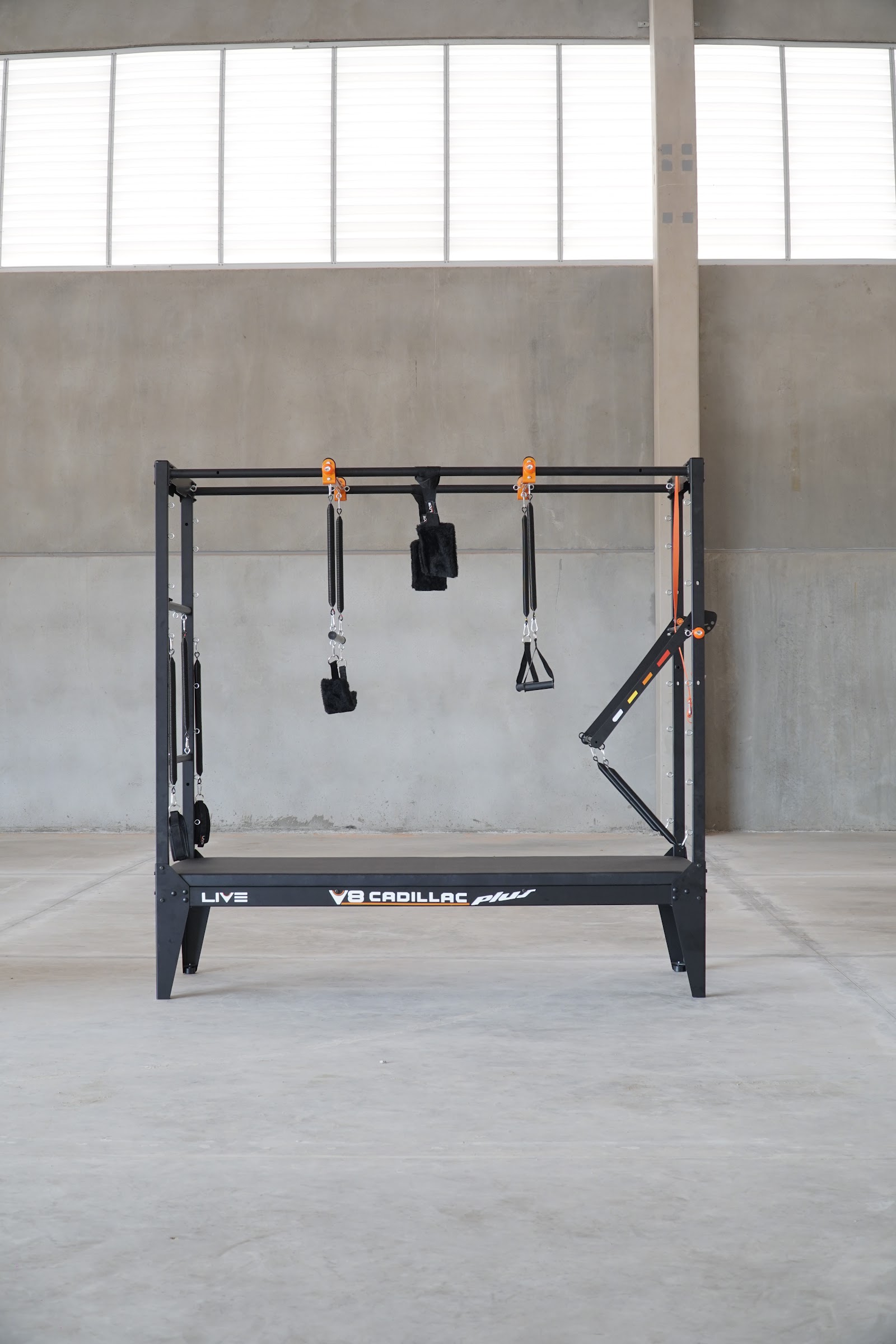
The method lengthens what sitting shortened, chest, hip flexors, the front of the shoulders, while strengthening what weakened, the mid and upper back, the deep neck flexors, the glutes. Apparatus work shines here: the springs and push-through bar of a cadillac, for example, guide the spine into extension patterns that a mat alone cannot support. You can see the apparatus built for this on our equipment page.
It builds postural awareness
This is the piece that makes results last. Pilates teaches you to perceive your own alignment, to notice the slump beginning and correct it in real time, at your desk, in the car, in line at the store. Strength makes good posture possible; awareness makes it habitual.
It restores spinal mobility
A stiff thoracic spine forces the neck and lower back to compensate. Pilates articulation work, roll-downs, extensions, rotations, returns movement to the mid-back, which immediately reduces the load on its noisy neighbors above and below.
03What to expect
With regular practice, 2 to 3 sessions per week, most people feel less pain and a distinct lightness in their posture within a few weeks. Lasting correction comes from the combination the method is built on: strengthening plus habit re-education. The postural muscles get stronger in class; the awareness follows you out the door.
Posture-related neck and back pain often improves along the same timeline. For those specific issues we have dedicated posts on Pilates for neck pain and Pilates for lower back pain.
This content is informational. Persistent or worsening pain deserves evaluation by a qualified healthcare professional before starting any exercise program.