
There are two ways to become more flexible. One is to pull a muscle toward its limit and hold it there, hoping the limit moves. The other is to lengthen the muscle while it works, so your nervous system learns to trust, control and use the new range. Pilates is built on the second approach, and it is the reason athletes, lifters and famously "tight" people keep ending up on a reformer. Here is how it works.
Pilates improves flexibility actively: instead of just pulling on a muscle, it lengthens the muscle while strengthening and controlling the movement. The result is safer, more functional flexibility, range of motion you can actually use, with less injury risk than forced passive stretching.
01Active flexibility vs. passive stretching
The distinction sounds academic until you feel it in your body. Passive stretching takes a muscle to its end range using external force: gravity, a strap, your own hands. Active flexibility, the Pilates approach, takes the muscle through range while it is producing force and under control.
| Passive stretching | Pilates (active) |
|---|---|
| Pulls the muscle to its limit | Lengthens with control and strength |
| Fast range gains | Range you can actually control |
| Risk if pushed too far | Considerably safer |
| No strength in the new range | Strengthens you in the new range |
Passive work is not useless: it gains raw range quickly. But range without strength is range your body cannot protect. Pilates closes that gap by making every lengthened position an exercise in control.
02Why this matters
Fewer injuries
Flexibility backed by strength protects the joint instead of merely loosening it. The muscles around a mobile joint still know how to stabilize it at every point of the arc, which is exactly what forced stretching fails to teach.
Range you can use
A deep squat, a full overhead reach, a comfortable spinal twist: the point of flexibility is using it in real movement. Because Pilates trains strength and length together, the range transfers to daily life and sport instead of existing only on the mat.
Better posture, less nagging pain
Releasing chronically shortened muscles, hip flexors, chest, hamstrings, improves alignment and takes pressure off the neck and lower back. This is why flexibility work and posture work are two halves of the same coin, something we explore in our post on Pilates for posture.
Mobility that upgrades everything else
Free-moving joints improve the execution of every other exercise you do. This is why serious athletes and heavy lifters use Pilates for mobility: it adds range without sacrificing the stability their sport depends on, a pairing we cover in strength training with Pilates.
03Where the apparatus comes in
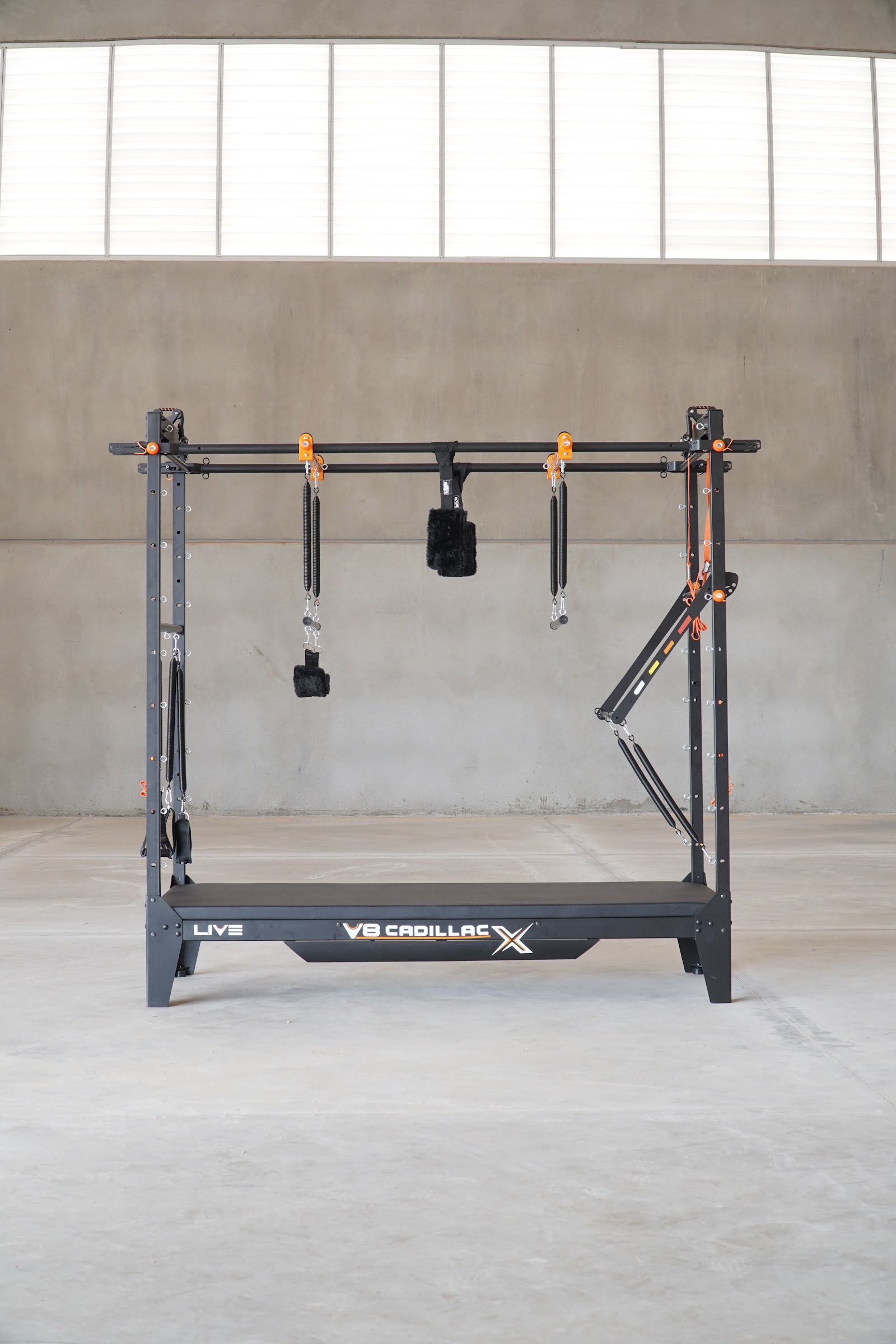
Equipment gives active flexibility work its finest tool: assistance. The springs of a reformer or the push-through bar of a cadillac can support part of your body weight, letting you move deeper into a range with complete control, then gradually withdraw the help as you own the position. That is something no mat stretch can replicate, and it is why apparatus such as the cadillac and the barrel, both built for spinal extension and deep, supported lengthening, are fixtures of every serious studio. You can see how each piece contributes on our equipment page.
04"But I am too stiff for Pilates"
Being stiff is not a barrier to starting Pilates. It is the best reason to start. The method meets you at your current limit and progresses from there, without forcing anything. Most people feel meaningfully more mobile within a few weeks, with the larger gains building over months of regular practice. If that is you, our guide to Pilates for beginners is the place to start.