
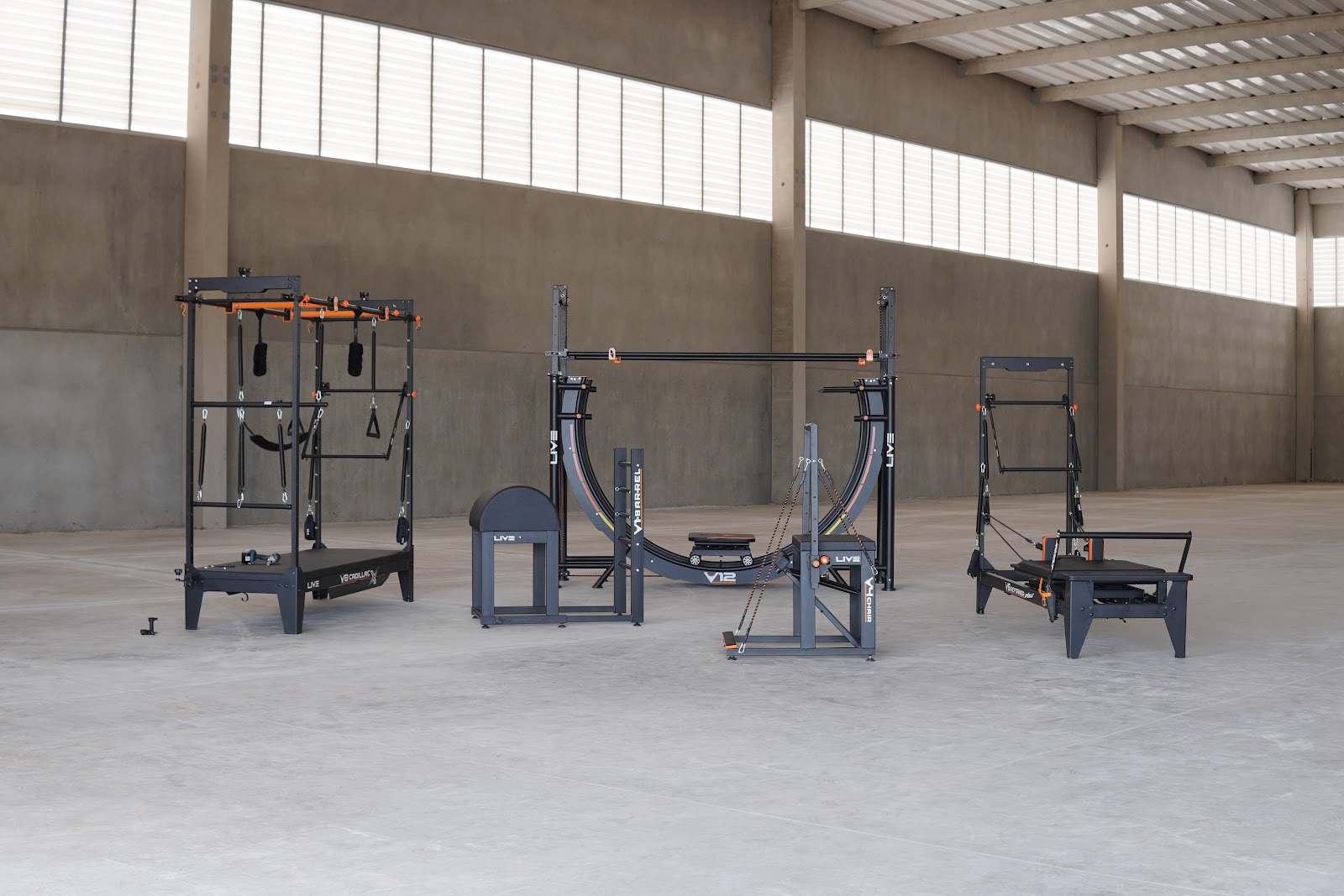
Every experienced Pilates practitioner was once the person hovering at the studio door, wondering if they were flexible enough, fit enough or coordinated enough to walk in. The honest answer, the one instructors give every day, is that none of that matters. Pilates was designed to be adaptable to any body and any level. This guide walks you through exactly what your first classes will look like, the mistakes worth avoiding, and what to bring.
Starting Pilates from zero is simpler than it looks: the method adapts to any level and focuses on breathing, control and core engagement before any load. Your first classes are about learning to feel your body, not about sweating buckets. With consistency, strength and posture follow naturally.
01What to expect from your first classes
Breathing comes first
Before anything challenging happens, you learn to coordinate breath with movement. It feels almost too simple, and then it turns out to be the foundation of everything the method does. Exhaling into effort, breathing wide into the ribs: these patterns will follow you through every exercise you ever do.
Then, core activation
Feeling and engaging the deep abdominals is the first big skill of Pilates. Instructors call it different things, centering, engagement, the powerhouse, but the experience is the same: discovering muscles you did not know you could control. This skill alone changes how your posture and your back feel within weeks.
A controlled, deliberate pace
Movements are slow and precise. Quality over quantity is not a slogan here; it is the actual programming principle. If you arrive from bootcamp culture expecting to be destroyed, the pace may surprise you. Give it three sessions: the difficulty is real, it just lives in control rather than chaos.
Progression only when the base is solid
Load and complexity increase only after your foundation is stable. On apparatus like the reformer, springs can even assist movement at first, making some exercises easier than their mat versions, one reason beginners often progress faster with equipment than without it. Curious how mat and apparatus work compare? See reformer vs. mat Pilates.
02Common beginner mistakes
| Avoid | Do instead |
|---|---|
| Holding your breath | Keep the breath flowing with the movement |
| Chasing load before technique | Focus on alignment first; load follows |
| Comparing yourself to advanced students | Respect your own pace and progression |
| Forcing range through pain | Tell your instructor about any pain, always |
One more, subtler mistake: quitting at week two because results are not visible yet. Postural awareness arrives fast, visible change takes a few months, and the difference between people who transform and people who do not is almost always consistency, not talent. Our post on how long Pilates takes to show results sets the honest timeline.
03What to wear and bring
Comfortable, fitted clothing, fitted matters because your instructor needs to see your alignment, plus grip socks, and no shoes. Bring water and a willingness to learn rather than to exhaust yourself. That is genuinely the whole list.
04Mat, apparatus or group class?
All three doors lead into the same method, and with good instruction, all three work. Mat classes teach the fundamentals with nothing but body weight. Apparatus sessions use spring support to make movements accessible and progress precisely. Group apparatus formats, increasingly popular across the US, combine professional equipment with the energy and price point of a class setting; our group classes page shows how studios build them. Let a qualified instructor recommend the best entry point for your body, then commit to a schedule you can keep. Two to three sessions a week is the sweet spot for most people, as we cover in how often to do Pilates.