
A herniated disc diagnosis tends to make people afraid to move, and that fear is understandable. But for most cases, the evidence points in the opposite direction: guided, progressive exercise is one of the pillars of conservative treatment, and Pilates is one of the most frequently used methods for delivering it. The key is knowing what the method can realistically do, and which movements to keep off the table.
Yes, Pilates can help people with a lumbar herniated disc, provided it is guided by a professional. It strengthens the core, the muscular corset that supports the spine, and improves stability in the region, reducing load on the disc. Some movements must be avoided, especially forced flexion and loaded rotation, and above all during the acute pain phase.
01What a herniated disc is
Between each pair of vertebrae sits a disc that works as a shock absorber. In a herniation, part of that disc pushes out of place and can press on a nerve root, causing pain, tingling or weakness, most commonly in the lower back or neck. Two facts reframe the problem: not every herniation hurts, and the goal of exercise is not to "push the disc back in". The goal is to strengthen the musculature that stabilizes the spine and take pressure off the injured region.
02Why Pilates helps
It strengthens the core
The deep abdominals, the lumbar muscles and the pelvic floor form the corset that supports the spine. When that system is strong and coordinated, less of everyday load lands on the disc itself.
It improves movement control
Pilates teaches the spine to move with awareness, replacing the movement patterns that trigger pain with ones the back can tolerate. For a herniation, how you move matters as much as how strong you are.
It is low impact
Supported work, on the mat or on spring-based apparatus, loads the body without jolts. That makes meaningful strengthening possible even while the region is still irritable.
It allows precise progression
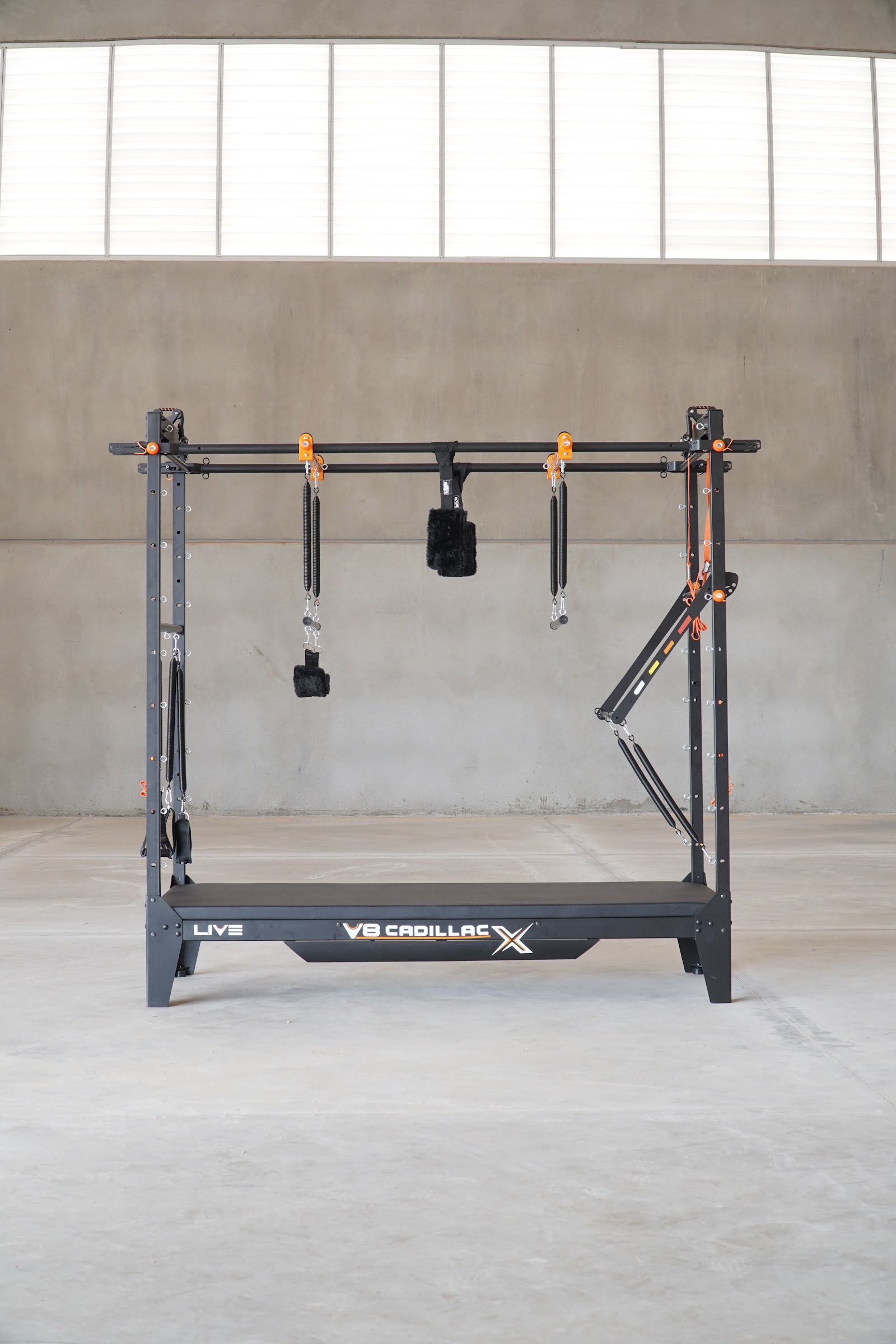
Spring resistance can start feather-light and increase in small steps as tolerance improves. Apparatus like the reformer and the cadillac exist precisely to make that fine dosing possible; our guide to the professional reformer covers what that support looks like in practice.
03Which movements help, and which to avoid
Usually indicated
- Core stabilization in a neutral spine position.
- Gentle, controlled spinal mobility.
- Glute and leg strengthening. Strong hips take work away from the lower back.
- Breath work and decompression.
Avoid, especially in the acute phase
- Forced forward flexion of the trunk.
- Loaded rotation of the spine.
- Crunch-style movements that curl the lumbar spine.
- End-range positions without control.
Treat this list as a general map, not a prescription. What works for one spine can be wrong for another, which is why individual assessment is non-negotiable.
04When to start, and when to wait
In the acute phase, with intense pain radiating down the leg, the priority is pain control and avoiding whatever aggravates it. In the stable phase, guided Pilates is one of the safest ways to rebuild strength and confidence in movement. The difference between helping and harming lies less in finding the "right exercise" and more in having a professional who assesses, doses and tracks your progression. Clinics and studios that serve this audience increasingly structure that tracking formally; our post on clinical Pilates and progress tracking shows how.
This article is for general information only and is not medical advice. A herniated disc should be evaluated by a physician or physical therapist before you exercise, especially during a pain flare. Exercise for this condition should always be individualized and supervised.