
Scoliosis breaks the assumption that underlies most exercise programming: that the two sides of the body need the same thing. In a scoliotic spine, one side of the musculature has shortened while the other has lengthened, which means the standard, symmetric routine that helps most people can quietly reinforce the very asymmetry it should be correcting. That is why the golden rule of Pilates for scoliosis has nothing to do with specific exercises, and everything to do with individualization.
Pilates can help people with scoliosis by strengthening and rebalancing the musculature, improving posture and easing pain. But there is a golden rule: there is no ready-made recipe. Every scoliosis is different, and the exercises must be individualized by a professional who knows the curve and the case.
01What scoliosis is
Scoliosis is a lateral deviation of the spine, shaped like a "C" or an "S". It creates asymmetries: on one side the musculature shortens, on the other it lengthens. The goal of exercise is not to "straighten" the spine. It is to balance those forces, strengthen the trunk and improve function and comfort in daily life.
02How Pilates helps
Muscular rebalancing
The method can work each side of the body differently, strengthening here and lengthening there, exactly as the curve demands. Spring-based apparatus makes this asymmetric dosing practical and precise.
Core strength
A strong trunk supports the spine better and reduces the overload that drives discomfort.
Postural awareness
Practitioners learn to feel and correct their own patterns during the day, which extends the work far beyond the session.
Pain relief
Less muscular tension and more mobility tend to reduce the aches that accompany the curve.
03Why individualization is everything
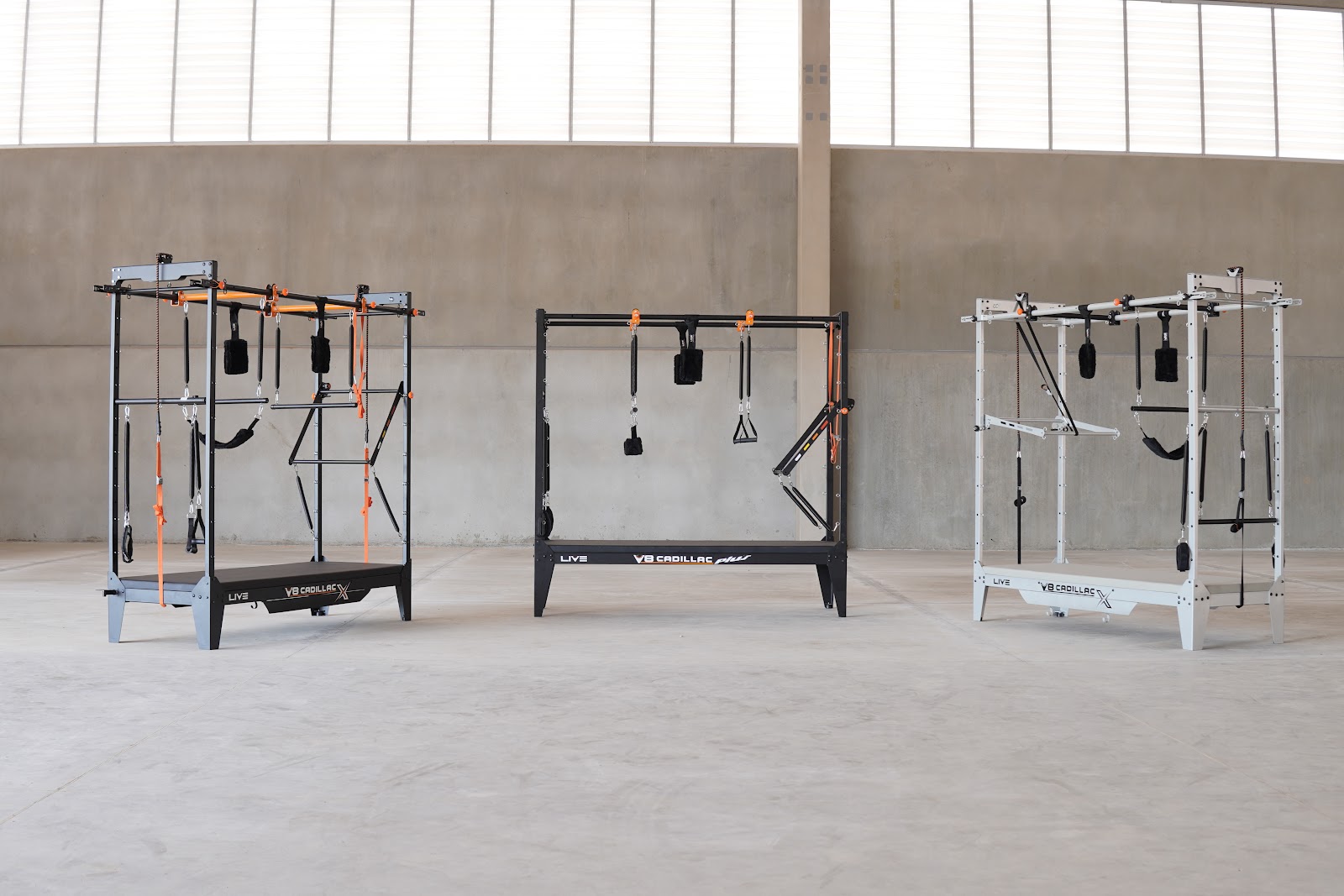
In scoliosis, what strengthens one side may need to lengthen the other. A generic exercise, applied identically to both sides, can end up reinforcing the asymmetry. This is what separates Pilates that helps from Pilates that gets in the way: a professional who assesses the curve, chooses the variations and adjusts each movement to the case in front of them. Apparatus with independent spring settings, like the cadillac and reformer, are especially suited to this work; see our overview of Pilates apparatus.
04What to avoid
- Standard symmetric routines applied without assessment.
- High loads without control.
- Movements that increase pain.
- Comparing your case with someone else's. Two curves are never the same.
Prioritize instead
- A plan individualized to your curve.
- Dosed strengthening and mobility.
- Awareness and posture work.
- Progression with professional follow-up.
For clinics and studios that receive scoliosis cases, documenting each client's asymmetries and progress systematically pays off; our post on clinical Pilates and progress tracking shows how studios structure it.
This article is for general information only and is not medical advice. Scoliosis management should be individualized and supervised by qualified health and movement professionals, based on an assessment of your specific curve.