
Ask a patient in week six of rehabilitation whether they are improving and you will get a feeling. Ask their chart, and, in too many practices, you will get the same feeling written down. What separates clinical Pilates from fitness Pilates is precisely this: in clinical work, progress is not an impression. It is measured, recorded and compared, session after session.
Clinical Pilates differs from fitness Pilates in one central way: patient progress is documented with objective data. Measuring range of motion, side-to-side symmetry and progression across sessions, instead of relying on perception alone, makes treatment safer, provable and aligned with the documentation standards expected of licensed rehabilitation professionals. This content is informational; always consult a qualified healthcare professional for diagnosis and treatment decisions.
01What separates clinical from fitness Pilates
| Fitness / conditioning Pilates | Clinical Pilates |
|---|---|
| Focus on strength, posture and well-being | Focus on rehabilitation and function |
| Subjective evaluation ("feeling better?") | Progress measured and recorded |
| Group classes, general goals | Individual plan built from assessment |
| No clinical chart | Documentation to professional standards |
Both are legitimate; they simply answer different needs. The clinical side is conducted by licensed professionals, with individual assessment and a documented record of evolution, typically for rehabilitation, pain management or post-operative recovery.
02Why measuring changes the outcome
What you do not measure, you cannot manage. When a clinician tracks joint angles, symmetry and range of motion from session to session, they see what the eye alone does not catch: a compensation pattern creeping in, an asymmetry returning, a gain that has quietly plateaued. That visibility lets the plan be adjusted at the right moment instead of weeks later.
It also changes the patient's side of the relationship. Showing someone, with numbers, that their range of motion has improved since the first session is proof of results, and proof of results is what sustains adherence through the unglamorous middle weeks of rehabilitation. Patients who can see their own progress stay with the plan.
03Documentation as professional standard
For rehabilitation professionals, objective documentation of patient evolution is not just good practice; it is part of the professional standard. Licensing boards and payers expect structured records, and a longitudinal chart with measurable data serves everyone at once: it saves the clinician time, supports the treatment plan before patients and insurers, and raises the perceived value of the clinical service itself.
The practical foundation is a consistent assessment protocol: the same measures, taken the same way, at defined intervals. Range of motion, load progression, symmetry, pain scales and functional tests, recorded in a structured chart rather than free-form notes. Consistency is what turns individual measurements into a progression curve.
04Making it practical: equipment and structured tracking
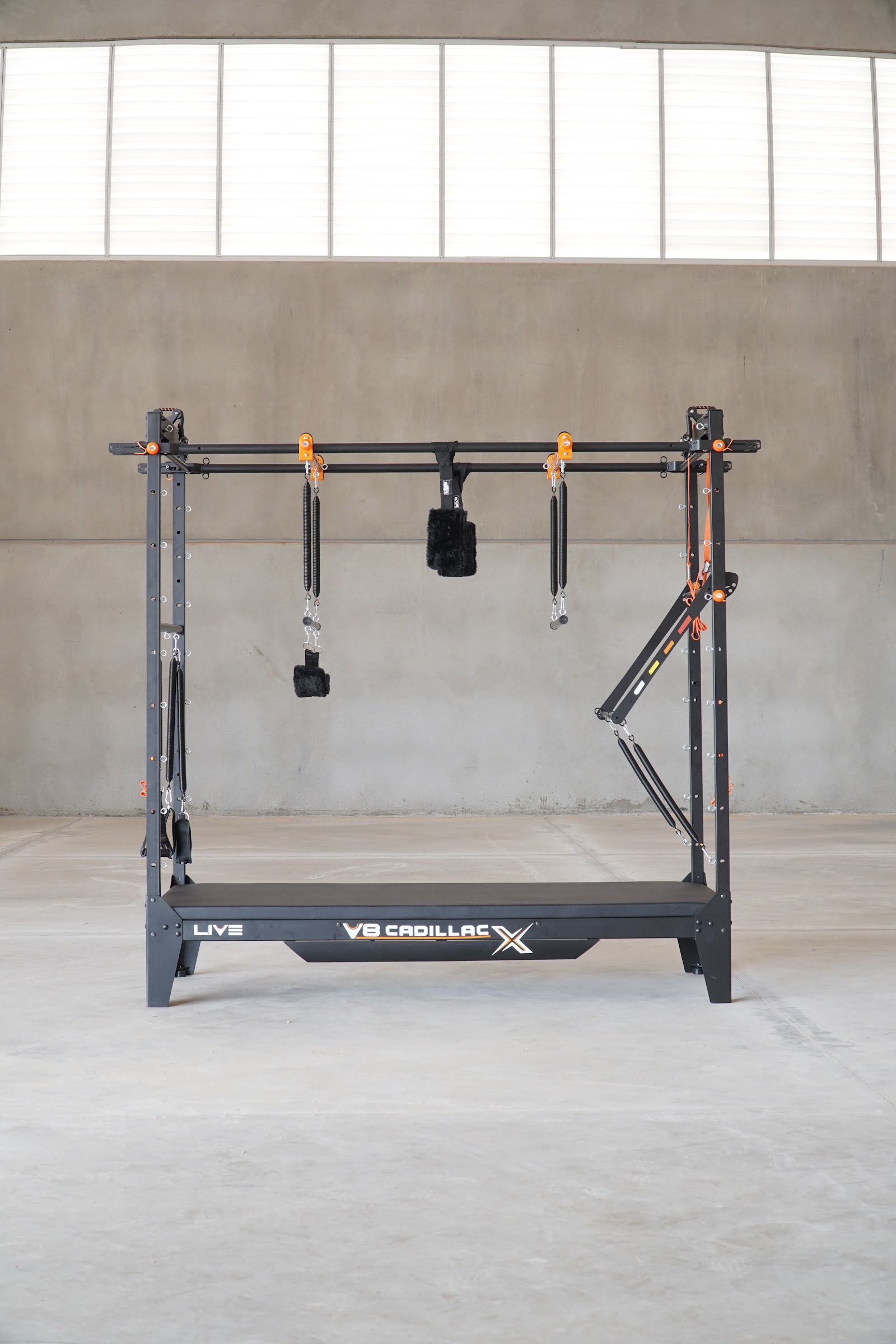
Recording everything by hand is the reason many practices give up on rigorous tracking, so the workflow has to be realistic. Structured assessment forms, standardized measurement routines and digital records make longitudinal tracking manageable in a busy schedule. The equipment matters too: apparatus with fine, repeatable load adjustment lets the clinician dose resistance precisely and reproduce conditions between sessions, which is what makes measured comparisons meaningful. Springs at the same setting, the same apparatus configuration, the same test position: that repeatability is the quiet engineering behind good clinical data.
This is one of the reasons clinics weigh equipment differently than studios do. If you are equipping a clinical practice, our guide on choosing premium equipment for studios and clinics covers how priorities shift, and our equipment page shows the apparatus line, including the Cadillac and Reformer configurations most used in rehabilitation settings.
A note on scope: this article is informational and does not replace professional guidance. Diagnosis, treatment planning and clinical decisions belong to licensed healthcare professionals; data and documentation are tools that support their judgment, never a substitute for it.