

Pilates is living its best moment, and that may be precisely why the next decade will be more demanding for anyone who owns a studio. When a category booms, everyone gets in, and the very growth that fills your schedule today is what erodes your differentiation tomorrow. The owners who understand that early are the ones who will still be premium in five years.
The Pilates market is expanding fast, and expansion brings competition, price pressure and the risk of commoditization. What sustains a premium studio, according to industry operators and consultants, is differentiation: specific niches, a distinctive experience, modern equipment as a strategic asset, and group formats that improve revenue per hour without proportionally raising cost per client.
01The boom is real, and so is the flip side
The numbers explain the optimism. Industry analysts project the global Pilates reformer market growing from roughly $7.6 billion in 2025 to nearly $17 billion by 2035, while the broader Pilates and yoga studio market is already estimated at well over $100 billion and growing at double-digit rates. Demand has surged across markets, studios report full schedules, and waitlists have become normal in many cities.
For the studio owner, especially the clinician or instructor who built the business on the method itself, the picture is encouraging. But operators and analysts keep pointing to the other side of rapid expansion: the risk of commoditization. As the category grows, competition and price pressure grow with it. Low-cost formats and generalist gyms adding reformer classes lower the barriers to entry and push the average ticket down. Management consultants are blunt about it: avoid the price war, because it destroys margin and, eventually, the business. The way out is adding value and differentiating the experience.
It is a pattern other industries know well. When brand experiences start to look alike, clients stop comparing value and start comparing price. That is how giants with all the branding in the world, Kodak, Blockbuster, BlackBerry, lost their ground: the marketing evolved while the delivery stayed the same. In Pilates, the parallel is getting hard to ignore; we explored it in depth in our post on what Blockbuster teaches Pilates studio owners.
02What the data says about differentiation
There is broad agreement among operators about what sustains a premium studio in a competitive market:
- Specific niches and audiences. Athletes, pre- and postnatal clients, post-surgical rehabilitation, longevity: focus attracts and retains in a way generic positioning cannot.
- Experience and environment. Clients increasingly want more intense sessions, connection to what is current, and a real sense of community, not just a room with machines.
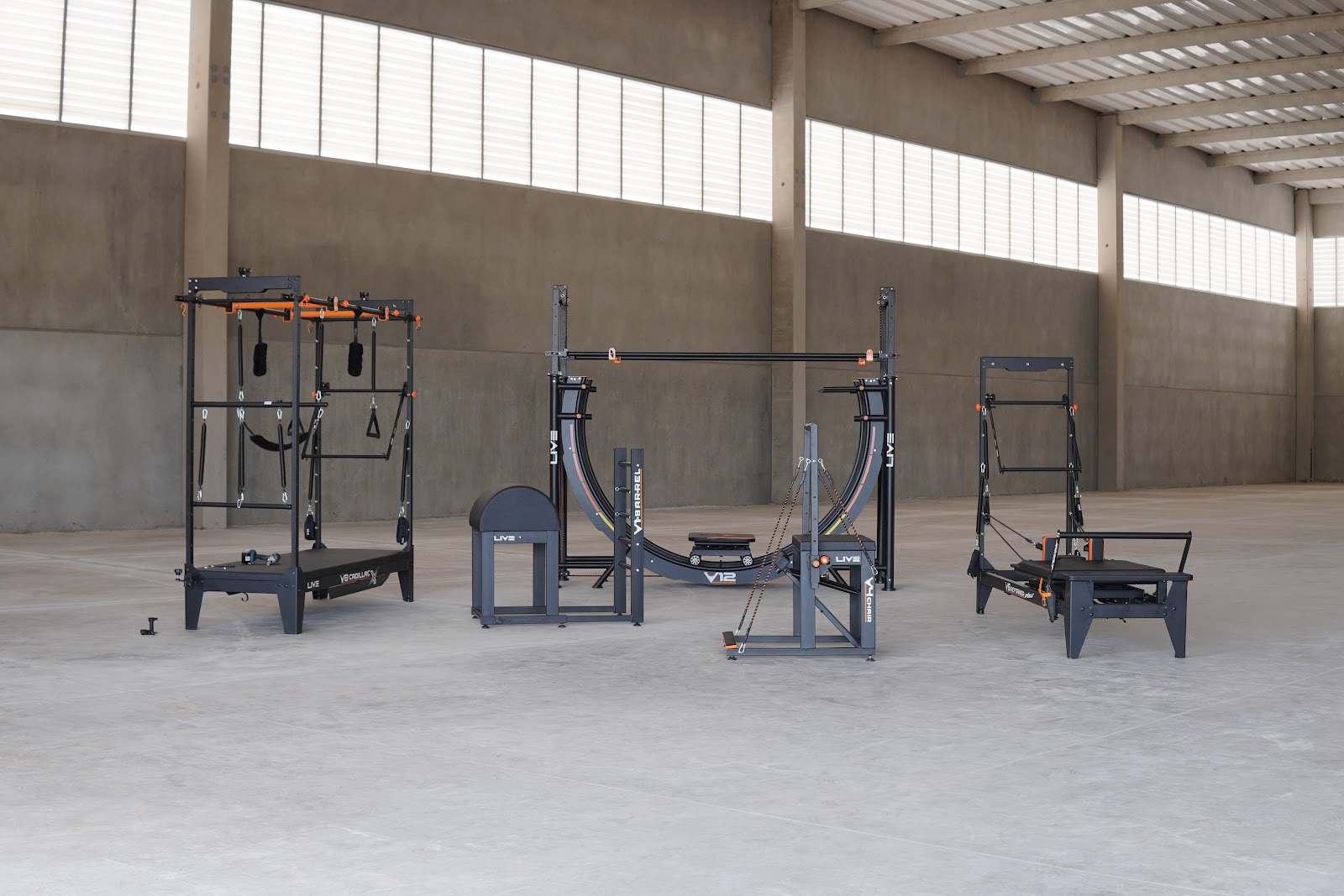
- Equipment as a strategic differentiator. Industry consultants consistently observe that studios investing in modern, advanced apparatus stand out from the competition. The machines are the most tangible, most photographable proof of positioning a studio has.
- The group model. Group reformer classes raise revenue per hour without proportionally raising cost per client, stabilize cash flow and reduce seasonality. Group reformer in particular has become the bridge between clinical Pilates and fitness Pilates, a format already consolidated in the United States and Australia and expanding everywhere else.
03The instructor bottleneck
There is one finding in international surveys of studio owners that deserves more attention than it gets: for about half of them, finding qualified instructors is the single biggest obstacle to growth. The point often passes unnoticed, but it is central. When the intensity and standard of a class depend almost entirely on each teacher's individual talent, scaling with consistency becomes nearly impossible, and opening a second location becomes a gamble on diluting your own experience.
That is why part of the industry has been anchoring the experience more in the structure, the equipment and a standardized method, and less in individual performance. This is not about diminishing the professional. It is about giving instructors a system that sustains the standard regardless of who is having a great day or a rough one. We cover the team side of this in our post on building a Pilates instructor team.
04A note for the clinician who owns a studio
If you are a physical therapist or movement professional who built your studio on technical excellence, none of this needs to read as alarmist. But it should read as strategic. The risk is not the category growing; it is continuing to deliver exactly the same thing while the market repositions around you. The question worth asking is not whether to invest in group Pilates, but which model sustains premium positioning, scale and consistency when the competition intensifies.
Brands that lead long cycles rarely just "do the old thing better". They adjust the delivery before the market forces them to, protecting margin, experience and positioning with a model that is hard to copy.
05Where Live enters this conversation
This is the context in which Live operates. Beyond manufacturing equipment, the company develops a line of apparatus with genuine engineering differentiators, including three-dimensional movement possibilities, and a structured group class method designed to expand the exercise repertoire, sustain intensity and standardize the experience across instructors. It is one way of turning this article's thesis into concrete delivery: equipment, method and community working as a single system. If you want to see how that applies to your studio, explore our group classes program and the equipment line, or talk to the team about your project.