
Osteoporosis quietly rewrites the rules of exercise. Movements that are harmless for a dense skeleton, a deep forward bend, a loaded twist, become genuine risks when vertebrae are fragile. Yet the answer is not to move less. Muscle strength, good posture and reliable balance are the best protection a person with osteoporosis can build, and Pilates, properly adapted, is one of the most effective ways to build them.
Pilates can be a strong ally for people with osteoporosis: it builds muscle strength, improves posture and trains balance, reducing the risk of falls and fractures. But it requires adaptation: forward flexion and forced rotation of the spine must be avoided, and professional supervision is indispensable.
01What osteoporosis changes about exercise
Osteoporosis leaves bones more fragile and prone to fracture, above all in the spine, hip and wrist. That gives exercise a double mission: strengthen the musculature that protects those bones, and improve balance so falls, the main trigger of fractures, become less likely. The constraint is equally clear: the spine must not be pushed through risky ranges of motion while it is vulnerable.
02Why Pilates helps
Strength and skeletal stimulus
Resistance work preserves muscle mass and provides the mechanical stimulus bones respond to. Spring-based training delivers that stimulus in a controlled, adjustable dose.
Balance and fewer falls
Pilates trains stability and proprioception, the body's sense of where it is in space. For fracture prevention, not falling in the first place is the single most effective strategy there is.
Posture
The method directly counters hyperkyphosis, the rounded-upper-back posture common with bone loss, by strengthening the back extensors and opening the front of the body.
Low impact
Supported, dosed loading without jolts lets fragile skeletons train meaningfully without being put at risk.
03What to prioritize, and what to avoid
Avoid
- Forward flexion of the spine, the rolling and curling movements.
- Forced trunk rotation.
- Crunch-style abdominals that round the lumbar spine.
- Sudden movements and impact.
Prioritize
- Back extension and back-line strengthening.
- Balance and stability work.
- Leg and hip strength.
- Posture training in neutral alignment.
04How to start safely
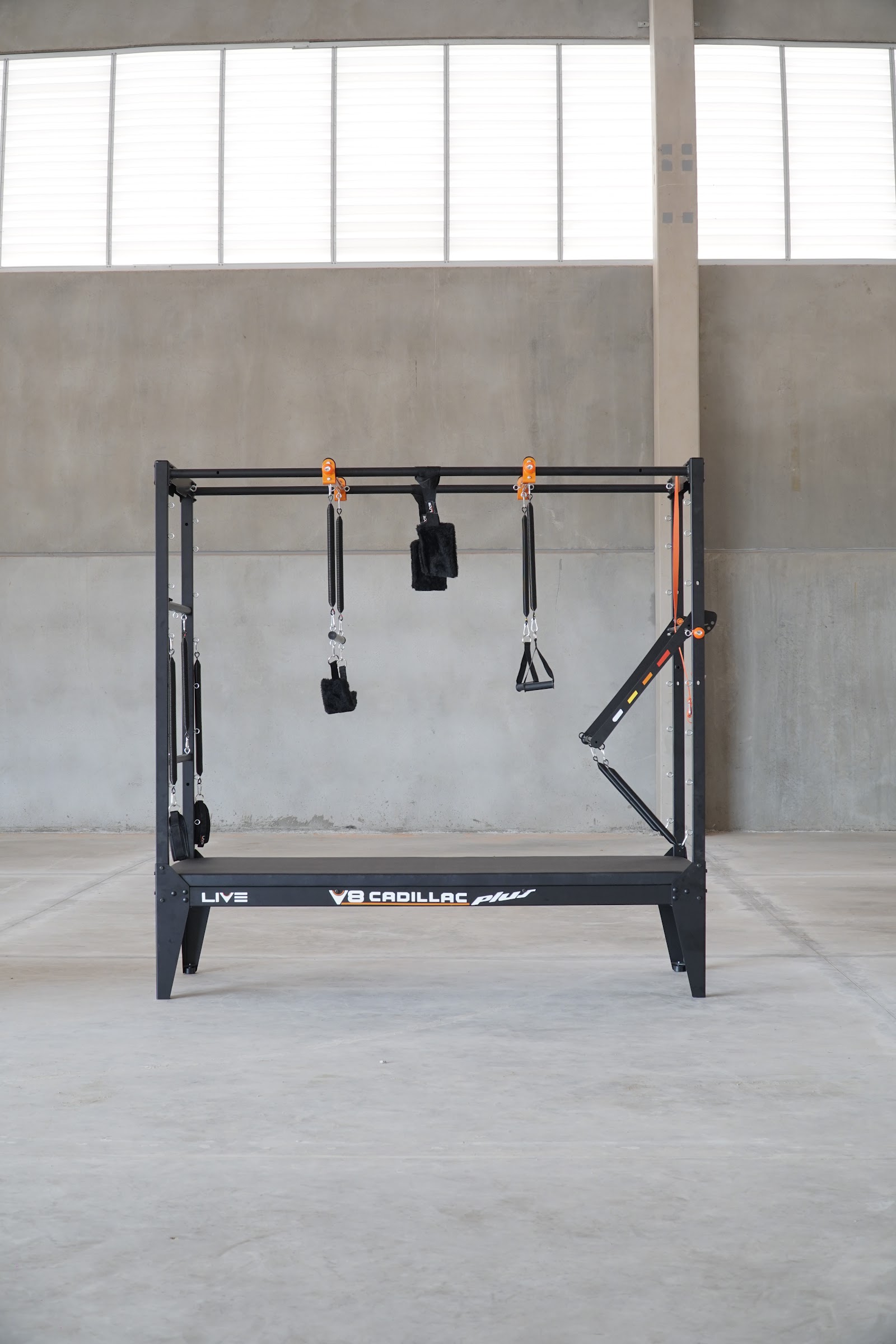
The starting point is assessment, both medical and by the Pilates professional, taking into account the degree of bone loss and any fracture history. From there, individual sessions are the way in, preferably on apparatus, which offers support and fine load adjustment, allowing progress while steering around exactly the movements that carry risk. The stability and build quality of the equipment itself matters more for this audience than for any other; our guide to studio-grade Pilates equipment covers what to look for, and our equipment overview shows the full apparatus lineup.
This article is for general information only and is not medical advice. Exercise with osteoporosis should follow a medical evaluation, account for bone density and fracture history, and be supervised by a qualified professional at all times.