
Sciatic pain has a signature: it starts in the lower back and travels, through the glute, down the leg. It can make sitting miserable and walking cautious. The instinct is often to stretch aggressively or to stop moving altogether, and both instincts tend to backfire. What actually helps is a middle path: targeted stabilization and gentle mobility, done at the right time. That is precisely the territory where Pilates works best.
Pilates can help sciatic nerve pain by strengthening the core, stabilizing the lumbar spine and improving hip mobility, which together take pressure off the nerve. One caution: during an acute flare-up, some movements make things worse. The key is doing the right exercises at the right time, with professional guidance.
01Why the sciatic nerve hurts
Sciatica usually comes from compression of the nerve in the lumbar region, often from a herniated disc, or from tension in deep hip muscles like the piriformis, which the nerve passes near. The pain radiates from the low back into the glute and leg. The goal of exercise is always the same: decompress and stabilize, never force.
02How Pilates helps
It strengthens the core
A strong deep core supports the lumbar spine and reduces the load that ends up compressing the nerve. This is the foundation of almost every evidence-informed approach to sciatic pain.
It mobilizes the hip
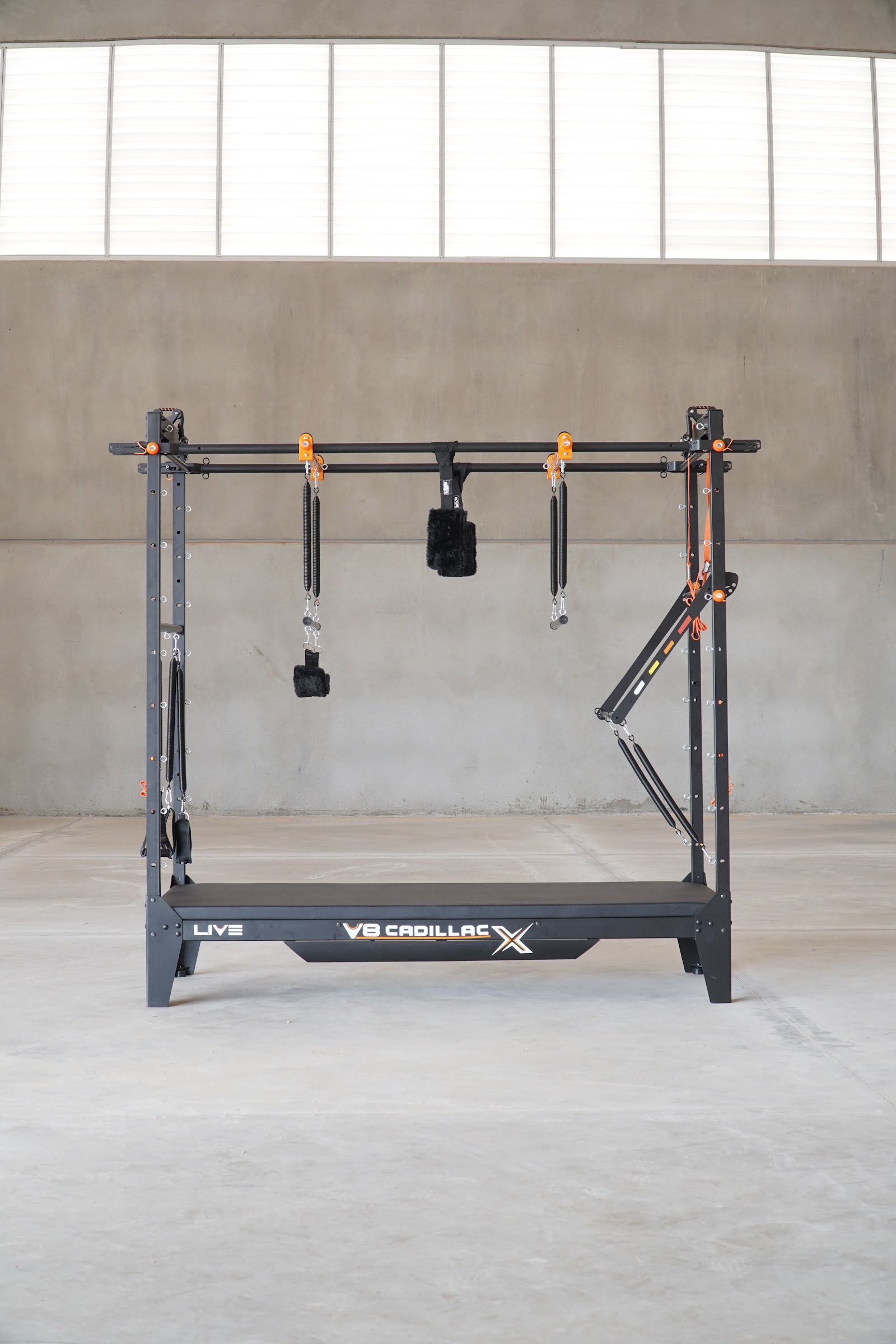
Releasing the piriformis and the gluteal region eases tension along the nerve’s path. Spring-assisted work on the Cadillac and reformer makes this possible without forcing range.
It reeducates movement
Pilates teaches you to bend, lift and rotate without compressing the lumbar spine, which is what prevents the next flare-up rather than just soothing this one.
It is low impact
No jolts, no pounding: resistance comes from springs, so the work strengthens without the impacts that trigger nerve pain.
03During a flare-up: what to avoid
Avoid during a flare-up
- Forced spinal flexion
- Loaded rotation
- End-range positions
- Stretching into increasing pain
Prioritize in the stable phase
- Core stabilization
- Gentle hip mobility
- Decompression work
- Guided, gradual progression
One red flag deserves emphasis: intense pain accompanied by leg weakness or tingling calls for medical evaluation before any exercise program. Once the acute phase settles and you are cleared to move, a well-guided program can begin rebuilding stability, and most practitioners feel meaningful relief within a few weeks of consistent work. For the broader picture of spine-focused practice, see our guide to Pilates for lower back pain.
Health disclaimer: This article is for general information only and is not medical advice. Radiating pain, numbness or leg weakness require medical evaluation before starting any exercise program. Work with qualified professionals for an individualized plan.