
Glute training has become its own category of fitness, and most of it revolves around one muscle and one tool: the gluteus maximus and the barbell. Pilates approaches the same region from a different angle, and for a lot of goals, a smarter one. This article covers how the method trains all three glute muscles, how it compares with gym-based glute work, and what results to expect on what timeline.
Pilates is excellent for strengthening and shaping the glutes: it works not only the gluteus maximus, the volume muscle, but also the medius and minimus, which control hip stability and create the rounded shape. On the apparatus, spring resistance intensifies the stimulus, all with low impact on the joints.
01Why Pilates is so good for the glutes
It trains all three glute muscles
The gluteus maximus gets the headlines, but the medius and minimus do quiet, essential work: they stabilize the pelvis with every step and shape the upper and outer contour of the hip. Pilates repertoire, side-lying leg series, bridging variations, standing work on the chair, hits all three systematically, which is why practitioners develop glutes that are strong and shapely rather than just big.
It stabilizes the hip
Strong glutes align the pelvis and protect both the lower back and the knees. Weak glute medius in particular is behind a remarkable share of knee pain and running injuries. Training it is not cosmetic maintenance; it is orthopedic insurance.
Spring resistance intensifies the work
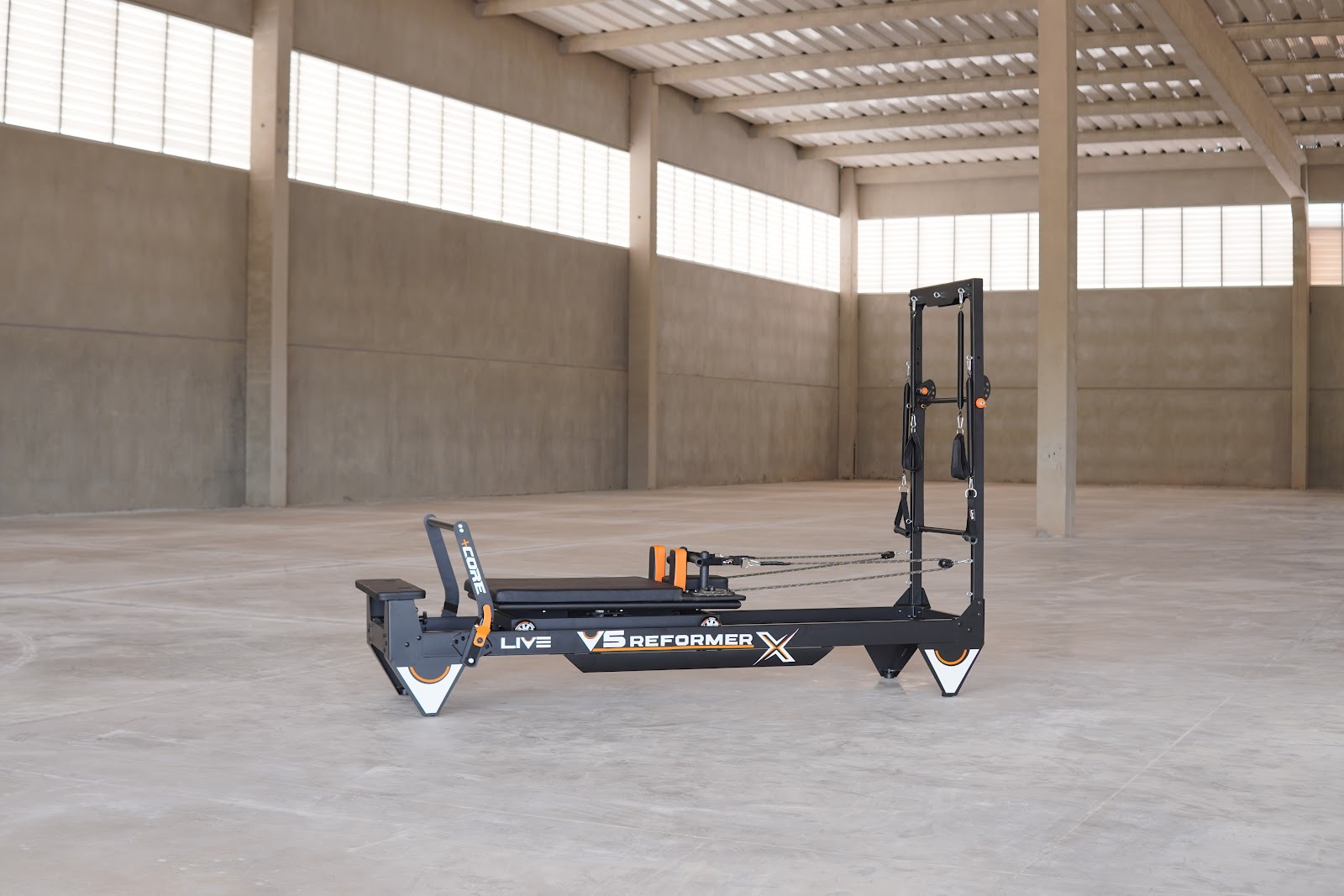
On the reformer and chair, adjustable springs load the glutes through long, controlled ranges: footwork, jumping variations, single-leg presses, standing splits. The load progresses as you do, and it arrives smoothly instead of compressing the spine. Explore the apparatus that makes this possible on our equipment page.
You learn to actually fire the glutes
Many people squat for years while their lower back and quads quietly do the glutes' job. Pilates teaches conscious activation: feeling the right muscle switch on and holding it responsible for the movement. That skill transfers to every other workout you do.
02Pilates vs. the gym for glutes
| Weight training | Pilates |
|---|---|
| Heavy loads and hypertrophy | Activation and stability |
| Best for maximum volume | Best for shape and control |
| Focus on gluteus maximus | Medius and minimus included |
| Higher impact and spinal load | Low impact, joint-friendly |
The honest split: for maximum volume, loaded gym work is the more specific tool. For activation, shape, hip stability and low-impact strength, Pilates delivers enormously, and the two combine beautifully. Many of the strongest lower bodies in any studio belong to people doing both, an approach we detail in strength training with Pilates.
03Results and timeline
- First weeks: noticeably better activation and firmness. You feel the glutes working in exercises where you previously felt only thighs or lower back.
- 2 to 3 months: visible change in shape and firmness with regular practice, typically 2 to 3 sessions per week.
- Ongoing: hip stability keeps improving, which pays dividends in posture, knees and lower-back comfort. The full journey is mapped in how long Pilates takes to show results.
On the mat, resistance bands and props can substitute for spring load. But if shape and strength are the goal, apparatus work is where the method shows its full power for the lower body.