
Few topics in fitness attract more miracle promises than cellulite, so let us start where most articles end: no exercise eliminates cellulite on its own, and anyone who says otherwise is selling something. What honest movement practice can do is meaningfully improve how the skin looks and feels. This article explains how Pilates contributes, what a realistic expectation looks like, and why the method earns its place in the overall plan.
Pilates can improve the appearance of cellulite, but honesty matters: no exercise eliminates it by itself. By toning the underlying muscle, improving tissue firmness and stimulating circulation, Pilates leaves skin looking smoother. Results are best when combined with good nutrition, hydration and aerobic activity.
01How Pilates improves the appearance
It tones the underlying muscle
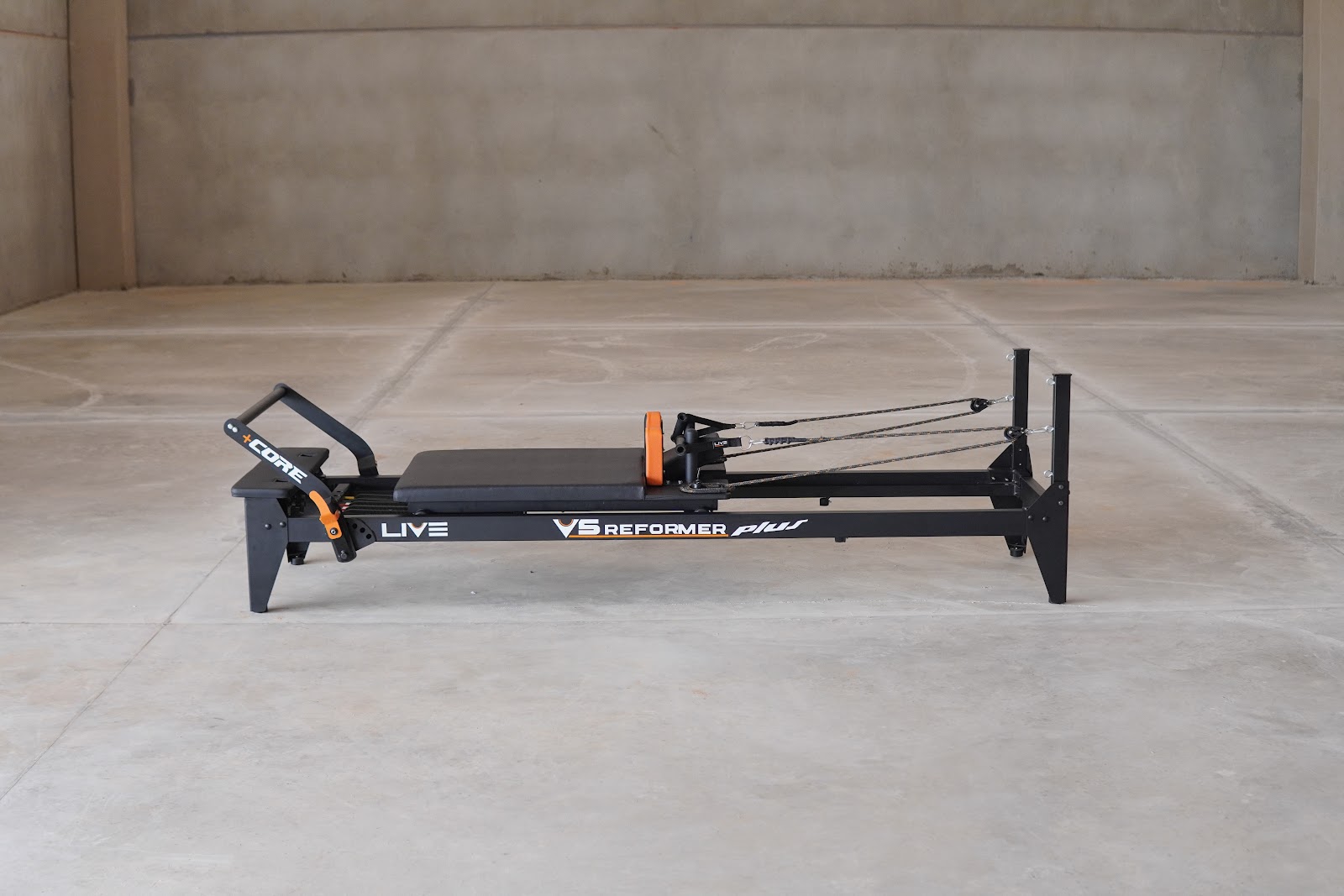
Cellulite lives in the tissue between skin and muscle. When the muscle underneath is firm and well developed, the surface above it sits smoother and the region looks visibly better. Pilates leg and glute work, especially against spring resistance on the reformer, builds precisely that muscular base. Our post on Pilates for glutes covers the strongest exercises for the area most affected.
It stimulates circulation
Circulation is one of the factors that influence how cellulite looks. The continuous, full-range movement of a Pilates session activates blood flow through the legs and hips, and regular practice keeps that stimulus coming several times a week.
It shifts body composition
More lean muscle and less fat improve the contour of the entire lower body. Pilates contributes the muscle side of that equation directly, and supports the fat-loss side as part of an active routine, a relationship we unpack in our post on Pilates and weight loss.
It does all of this with low impact
Legs and glutes get trained thoroughly without pounding the knees, hips or spine, which makes the routine sustainable for practically everyone, and sustainability is what produces results in this area.
02Setting the right expectation
| Do not expect | Do expect |
|---|---|
| Cellulite to disappear completely | Firmer, smoother-looking skin over time |
| Results from exercise alone | Best results from training plus nutrition, hydration and cardio |
| A miracle in one week | Gradual, consistent improvement over weeks to months |
Cellulite has multifactorial causes: genetics, hormones, circulation and body composition all play a role. Pilates is a genuine ally within the bigger picture, not a standalone cure, and any program that promises otherwise deserves your skepticism.
03What a sensible routine looks like
- 2 to 3 Pilates sessions per week, with emphasis on leg and glute work against resistance. Group reformer formats, like the ones described on our group classes page, make the frequency easy to sustain.
- Aerobic activity on other days: walking, cycling, swimming, whatever you will actually keep doing.
- Nutrition and hydration steady in the background, because they shape the tissue the training is firming.
Cellulite is influenced by genetics, hormones and circulation, and it varies enormously from person to person. For a plan tailored to your body, consult qualified health and fitness professionals.