
Pregnancy changes the body faster than almost any other life event: the center of gravity shifts, ligaments loosen, the lower back takes on new load, and the pelvic floor works overtime. Pilates has become one of the most recommended forms of prenatal movement precisely because it addresses each of those changes directly, with low impact and a heavy emphasis on breath. The rules are simple but firm: medical clearance first, and adaptations that change with each trimester.
With medical clearance, Pilates is a safe and beneficial practice during pregnancy. It strengthens the pelvic floor, eases the lower back pain typical of gestation, improves breathing and prepares the body for birth and recovery. Adaptations change each trimester, and certain movements should be avoided throughout.
01Benefits during pregnancy
A stronger pelvic floor
Pilates trains the muscles that support the uterus and that work hardest during delivery and postpartum recovery. Pelvic floor conditioning is one of the best-documented benefits of prenatal exercise.
Less lower back pain
As the belly grows, the center of gravity moves forward and the lumbar spine compensates. Targeted strengthening and postural work offset that shift and relieve the back.
Breath and relaxation
The breath awareness built in every session becomes a practical tool during labor, and a daily resource for managing tension along the way.
Posture and body awareness
In a phase of constant physical change, the practice keeps the expecting mother connected to her body and confident in how it moves.
02What changes each trimester
| Trimester | Focus | Main caution |
|---|---|---|
| First | Breathing, pelvic floor, light conditioning | Avoid exhaustion and overheating |
| Second | Leg and glute strength, posture, mobility | Avoid long periods lying flat on the back |
| Third | Comfort, breathing, birth preparation | Reduced range; focus on stability and relaxation |
03What to avoid
- Lying flat on the back for extended periods, from the second trimester on.
- Exercises performed face down.
- Abdominal work that compresses the belly, including traditional crunches.
- Jumps, impact and balance-challenging positions with a fall risk.
Prioritize instead
- Pelvic floor and breath work.
- Leg and glute strengthening.
- Gentle mobility.
- Stability and posture.
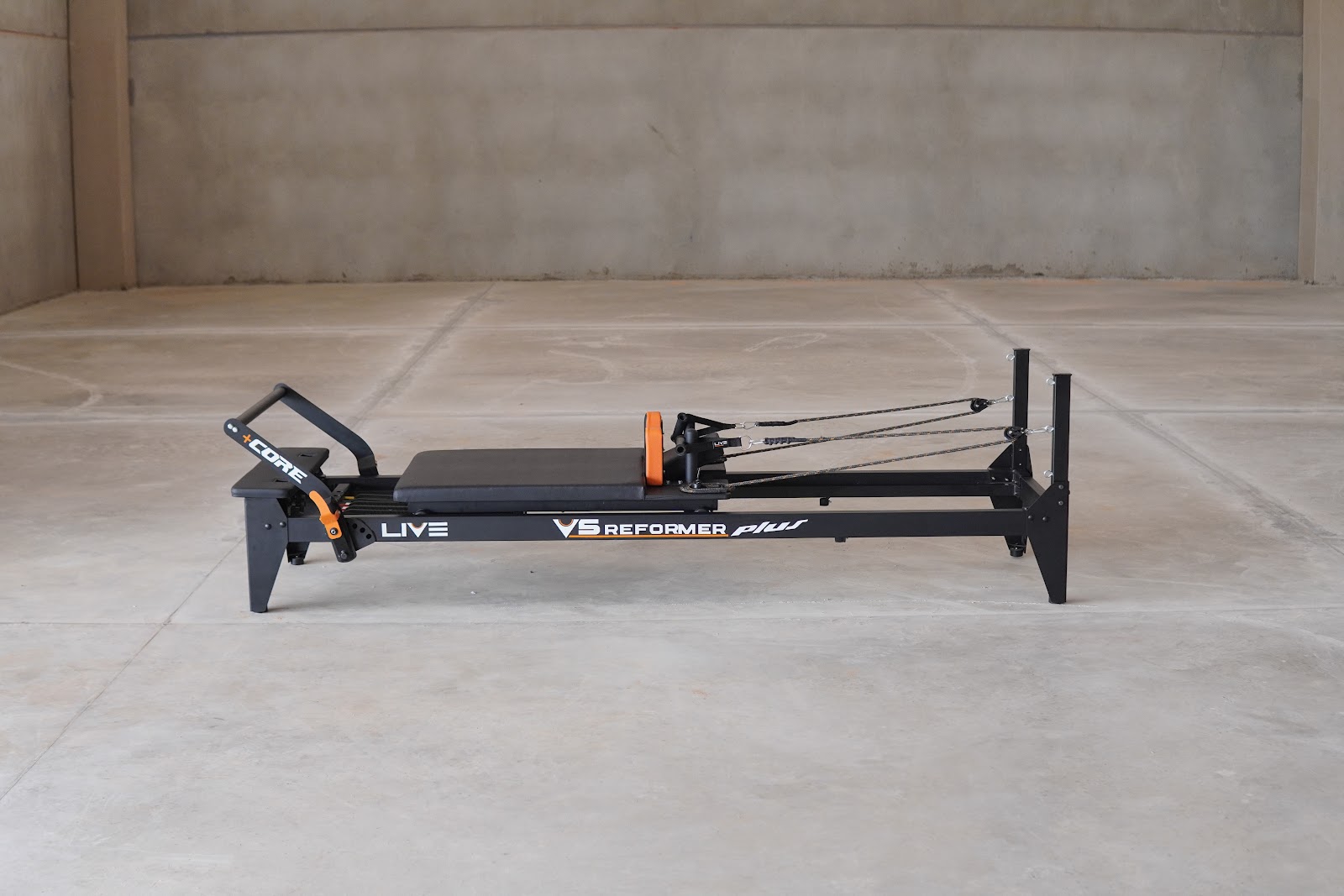
Spring-based apparatus shines in prenatal work because it supports the body while it strengthens it. An adjustable reformer or cadillac lets the instructor adapt position and load week by week; our overview of Pilates apparatus explains what each machine offers.
04And after the birth?
The return to movement after delivery should be gradual and cleared by a physician, respecting the type of birth and the recovery of the pelvic floor and abdomen. Pilates is widely used in that rehabilitation phase, always on an individualized basis. We cover the full comeback plan in our guide to postpartum Pilates, including how to handle diastasis recti.
This article is for general information only and is not medical advice. Always obtain clearance from your physician or midwife before starting or continuing exercise during pregnancy, and practice under the supervision of a professional experienced in prenatal work.