
Diastasis recti has a frustrating catch: the exercises most people instinctively reach for to "fix" their abs, crunches and sit-ups, are exactly the ones that can make the separation worse. Pilates has become one of the most widely used approaches for this condition because it targets what diastasis actually needs: reactivating the transverse abdominis, the deep corset muscle of the core, together with the pelvic floor, while keeping intra-abdominal pressure under control.
Pilates can help diastasis recti by reactivating the transverse abdominis (the deep core) and the pelvic floor while avoiding the traditional crunches that raise abdominal pressure and can widen the gap. Results depend on the degree of separation and on professional guidance, so a proper assessment by a physical therapist or qualified instructor should always come first.
01What diastasis recti is
Diastasis recti is a separation of the rectus abdominis, the paired "six-pack" muscles that run down the front of the abdomen. It is most common after pregnancy, when months of stretching thin out the connective tissue between the two halves, but it also occurs in other situations, including significant weight changes and chronic straining. The gap itself is only part of the story: what matters most is how well the abdominal wall generates tension and manages pressure.
That reframes the goal. Recovery is not about "squeezing the belly back together" from the outside. It is about rebuilding tension and function in the abdominal wall from the inside out, starting with the deepest layer of the core.
02How Pilates helps
It reactivates the transverse abdominis
The transverse abdominis is the body's natural corset. It wraps horizontally around the trunk, and when it fires correctly it draws the abdominal wall inward and supports the midline. Pilates is built around waking up and training exactly this muscle.
It connects the core to the pelvic floor
The deep core and the pelvic floor work as one pressure-management system. Training them together, which is standard practice in Pilates, is what keeps intra-abdominal pressure from pushing outward against the healing midline.
It coordinates breath with movement
Breathing pattern makes or breaks diastasis work. The coordinated exhale-and-engage pattern taught in Pilates prevents the "bearing down" that pushes the belly outward during effort.
It restores posture
Alignment of the ribcage and pelvis changes how much load lands on the linea alba, the connective tissue at the midline. Better trunk alignment means less constant strain on the very tissue that is trying to recover.
03What to avoid, and what to prioritize
Avoid, especially early on
- Traditional crunches and sit-ups. They spike intra-abdominal pressure and load the midline in exactly the wrong way.
- Heavy planks in the early phase. Long-lever front-loaded holds are an advanced demand for a wall that cannot yet generate tension.
- Any exercise that makes the belly dome or bulge. Visible doming along the midline is the clearest sign the load is too high.
- Heavy loads and impact without progression. Jumping and lifting have their place, but only after the deep system is working again.
Prioritize
- Transverse abdominis activation. Learning to engage the deep corset before every movement.
- Pelvic floor and breath work. The foundation of pressure control.
- Low-pressure exercises. Movements that challenge the core without pushing outward on the midline.
- Slow, supervised progression. Load increases only as the wall shows it can hold tension.
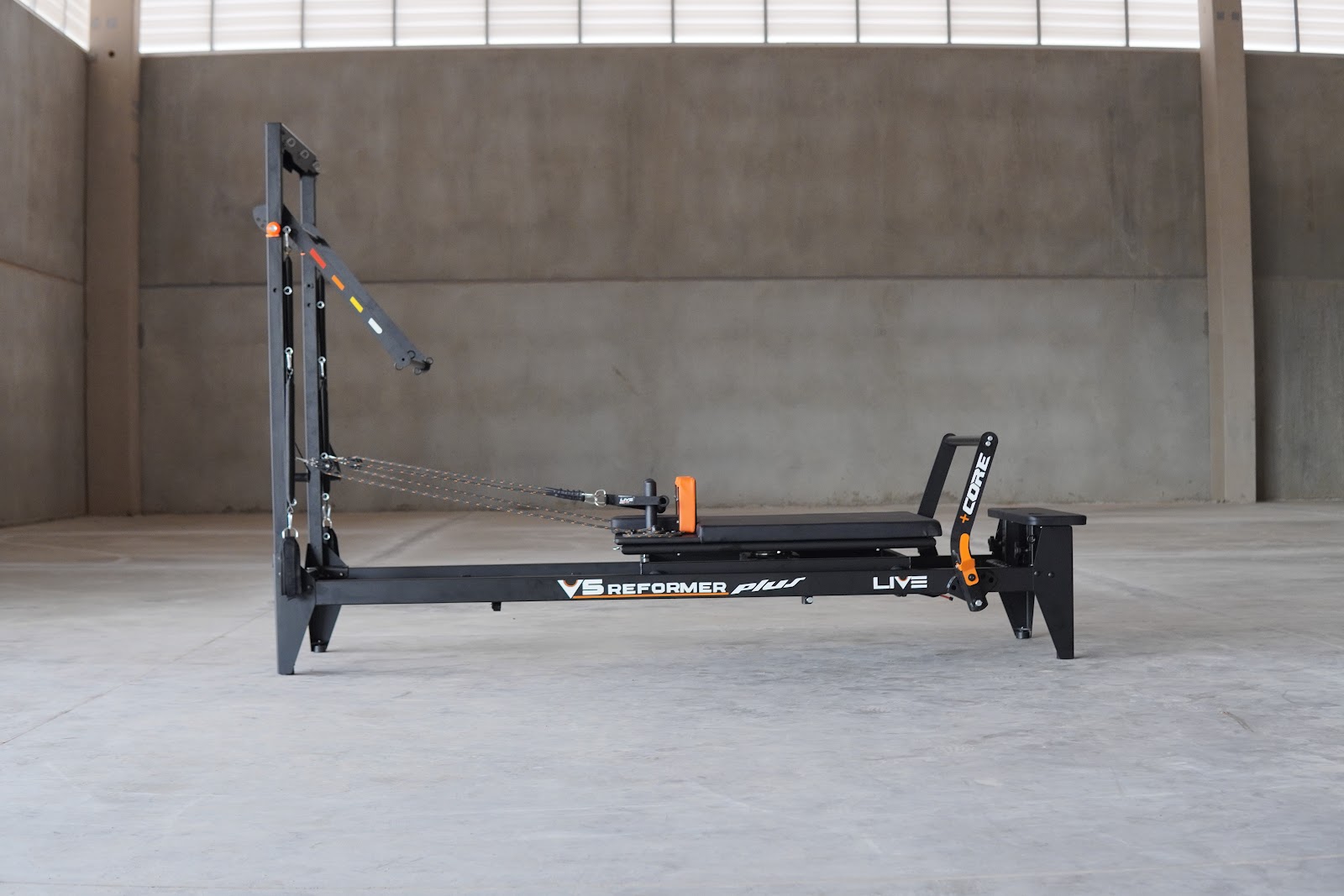
Spring-based apparatus work is particularly useful here. A reformer allows an instructor to fine-tune resistance so precisely that the deep core can be challenged without ever crossing into doming territory. Our guide to Pilates machines explains what each apparatus contributes.
04Get assessed before you start
The width and depth of the separation guide which exercises are appropriate, which is why an assessment by a physical therapist or qualified movement professional is the essential first step. It is also what prevents the most common mistake: reinforcing the problem with well-intentioned but wrong exercise. With the right plan and consistent practice, most people steadily recover function and firmness in the abdominal wall.
If you are a studio owner or clinician building a postpartum and core-recovery program, the apparatus you choose matters as much as the protocol. See our overview of Pilates equipment for studios and how group class formats can serve this audience.
This article is for general information only and is not medical advice. Diastasis recti should be assessed by a qualified health professional, such as a physical therapist, before you begin any exercise program, and your plan should be individualized and supervised.