
Leaking a little urine when you cough, laugh, sneeze or lift is far more common than most people admit, and far more treatable than most people believe. The muscles that control continence respond to training like any other muscle group, and Pilates happens to be one of the most systematic ways to train them. This article explains why the pelvic floor weakens, how the method rebuilds it, and the professional guidance that makes the difference between generic exercise and real results.
Pilates can meaningfully help with urinary incontinence by strengthening the pelvic floor, the muscle layer that supports the bladder and controls continence. Through breathing and deep core activation, the method retrains this region as one integrated system. It is especially relevant after childbirth, during menopause and for people who do high-impact training, always starting with a professional assessment.
01Why the pelvic floor weakens
The pelvic floor is a hammock of muscle that supports the bladder, uterus and bowel. Several very ordinary life events wear it down: pregnancy and childbirth stretch it, the hormonal drop of menopause thins it, aging slowly reduces its tone, and years of high-impact exercise or chronic constipation load it beyond what it can hold. When the muscle can no longer resist pressure from above, the result is leakage when you cough, laugh, sneeze or train.
The encouraging part is that this is a muscle problem with a muscle solution. Just as a weak shoulder can be rebuilt, a weak pelvic floor can be retrained, provided the training targets the right thing.
02How Pilates helps
It activates the pelvic floor directly
Specific exercises teach you to find, contract and relax this muscle group, which many people have never consciously used. That reeducation is the foundation of continence work.
It connects the pelvic floor to the breath
The diaphragm and the pelvic floor move together like two ends of a piston. Pilates breathing trains them to coordinate, so the pelvic floor manages intra-abdominal pressure automatically instead of being overwhelmed by it.
It integrates the deep core
The pelvic floor plus the transversus abdominis form the base of both continence and spinal stability. Pilates never trains the pelvic floor in isolation: it builds the whole system, which is why the results tend to hold up in real life, not just on the mat.
It is low impact
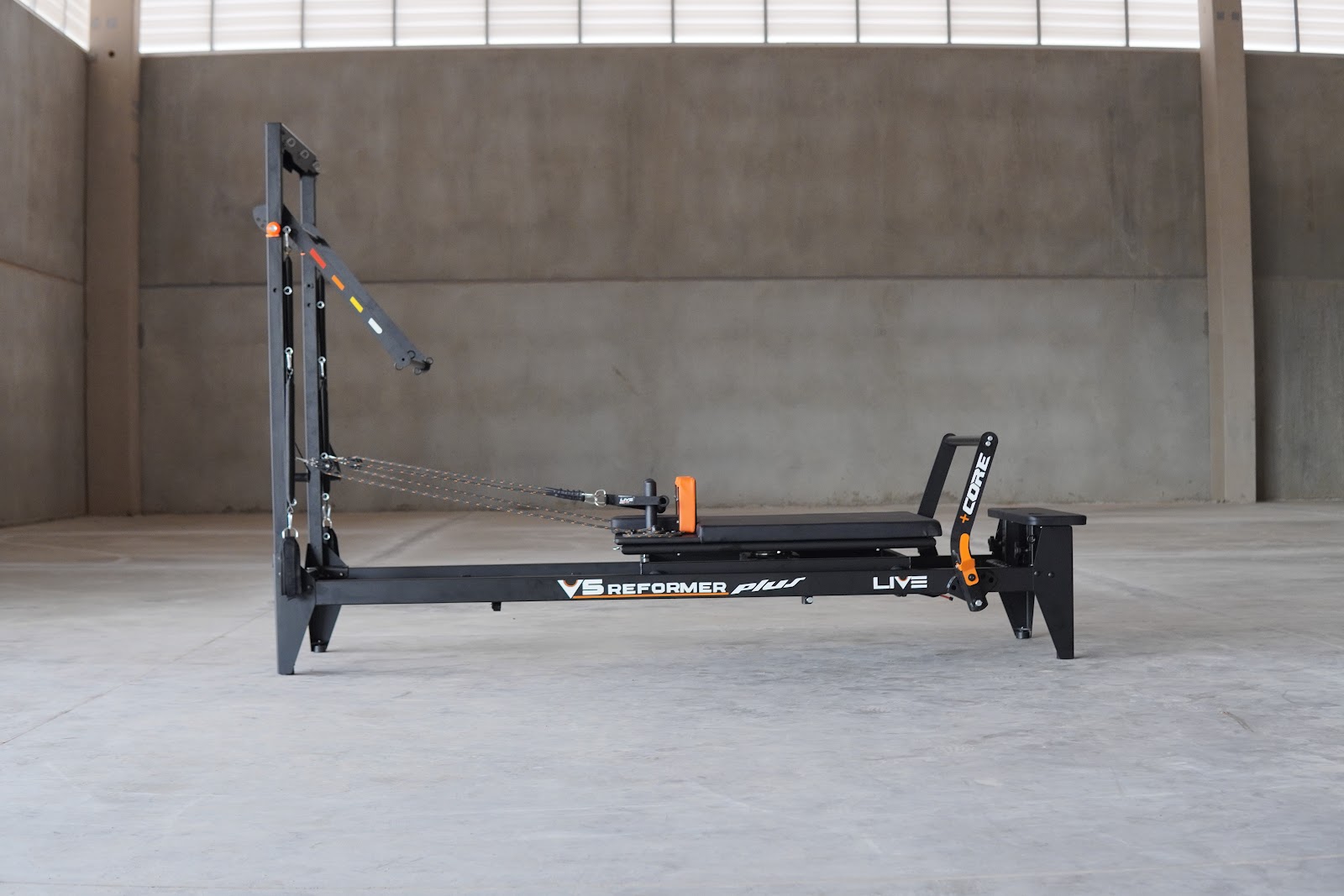
Running and jumping can worsen leakage while the muscles are still weak. Spring-based equipment such as the reformer lets you build strength without the repetitive impact that triggers symptoms, one reason clinics and studios rely on apparatus work for pelvic health programs.
03The one thing to do first
Before starting, get assessed by a qualified professional, ideally a pelvic health physical therapist. Here is why it matters: in some people the pelvic floor is weak and needs strengthening, but in others it is chronically tight and needs to learn to release first. The right exercise is different in each case, and generic "do your Kegels" advice can miss the problem entirely. An individualized Pilates program built on a proper assessment is what produces real change.
Incontinence is common during menopause and after childbirth, and it often improves within weeks to a few months of consistent, well-guided practice. If you are returning to exercise postpartum, our postpartum Pilates guide covers that transition in detail.
Health disclaimer: This article is for general information only and is not medical advice. Urinary incontinence has several possible causes. See a healthcare professional, ideally a pelvic health physical therapist, for an individual assessment before starting any exercise program.