
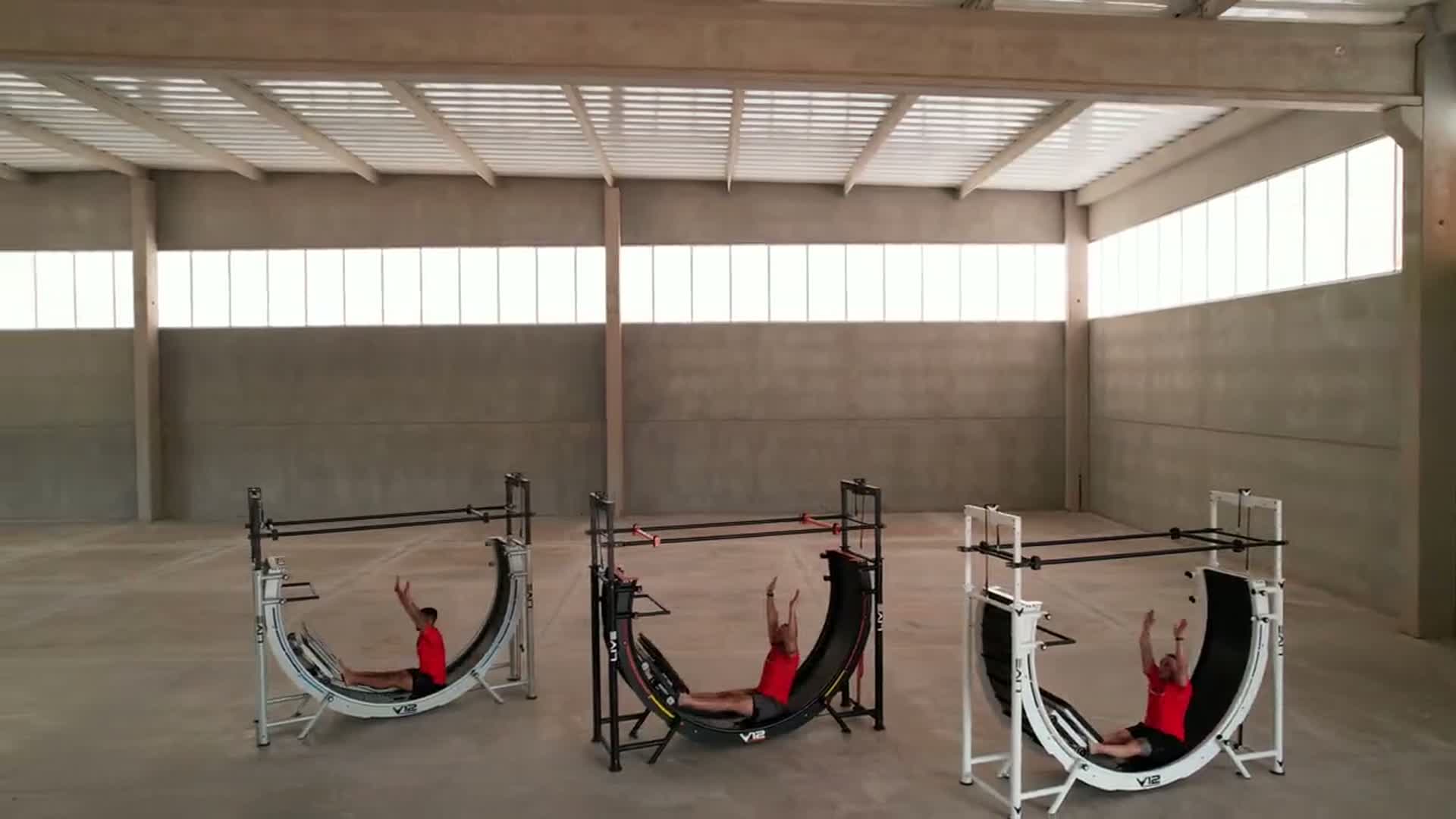
Somewhere along the way, Pilates picked up a reputation as a gentle workout for women, which would have surprised Joseph Pilates, the boxer and physical trainer who invented it to condition fighters and soldiers. The reputation is finally correcting itself: reformer studios across the United States report a steady rise in male clients, and professional athletes across the NFL, NBA and beyond have made the method part of their training. Here is why, and why the men who lift heaviest often benefit most.
Pilates is not "a women’s workout": it was created by a man, Joseph Pilates, to condition boxers and soldiers. Done with the right spring load and intensity, it is a demanding training method that builds core strength, improves posture and mobility, boosts performance and prevents injury, which is why more men, athletes and lifters keep adopting it.
01The myth and the origin
Joseph Pilates was a boxer, and he developed his method, which he called Contrology, for serious physical conditioning. The idea that Pilates is "light" or "just for women" is a historical accident, not a fact about the training. Done with the right load and intensity, especially on spring-resisted apparatus, it is a demanding workout of strength, control and stability, and it targets exactly what most gym routines leave undertrained.
02Why men should be doing it
A core that actually works
Not six-pack aesthetics: the deep, functional strength that supports a heavy squat, a deadlift lockout and every athletic movement. This is the base layer most training programs assume but never build.
Posture
Years of chest and arm work with neglected upper backs produce the classic rounded-shoulder lifter’s posture. Pilates rebalances the equation, as we cover in Pilates for posture.
Mobility
Freer hips and shoulders directly improve lift mechanics and sport performance, and reduce the compensations that end in injury.
Injury prevention
Stability and control protect the spine and joints under load. For runners specifically, our Pilates for runners guide details how the method addresses the sport’s classic weak links.
03Lifting alone vs. lifting plus Pilates
Weights or sport only
- Strength and muscle volume
- Focus on prime movers
- Risk of stiffness and imbalance
- Stabilizers left undertrained
Plus Pilates
- Core and base-level stability
- Mobility and movement control
- Fewer imbalance-driven injuries
- Better transfer to lifts and sport
04How to start
You do not have to quit the gym; Pilates complements it. Start once or twice a week in classes that dose the intensity properly. On apparatus, spring resistance provides a genuine challenge, recruiting prime movers and stabilizers together, and the difference shows up within weeks in your posture, your core and the quality of your other training. Skeptical about how hard it can get? Our guide to strength training with Pilates makes the case with specifics.
Health disclaimer: This article is for general information. Consult a qualified professional to align any new training method with your goals and health history.