
Pilates is one of the best cross-training options a runner can pick. It strengthens the core that stabilizes your trunk and pelvis on every stride, improves posture and running economy, and helps prevent the most common overuse injuries: knee, shin and hip. It does not replace running. It makes your running better.
Yes, Pilates helps runners. A stronger core and hips reduce wasted trunk motion and protect knees and shins from overuse injuries, while better posture and breath control improve running economy in the late miles. Two sessions a week, on easy or rest days, is enough to see gains within weeks.
01Why runners should be doing Pilates
Running is the same gesture repeated thousands of times. If the core and hips do not stabilize well, the overload travels down to the knees and ankles. Pilates trains exactly that base of stability and movement control, which improves efficiency and lowers the risk of repetitive-stress injury.
A stable core
Less side-to-side sway in the trunk means energy goes forward, not sideways. That is running economy in its most literal form.
Strong hips
Glutes and hip stabilizers protect the knee and shin from the injuries runners know too well, from runner's knee to shin splints.
Mobility
Hip and ankle range of motion frees up a longer, easier stride, without forcing flexibility the body has not earned.
Breath
The method's breath control transfers directly to pacing and endurance, especially when the effort climbs.
02How to fit it into a training week
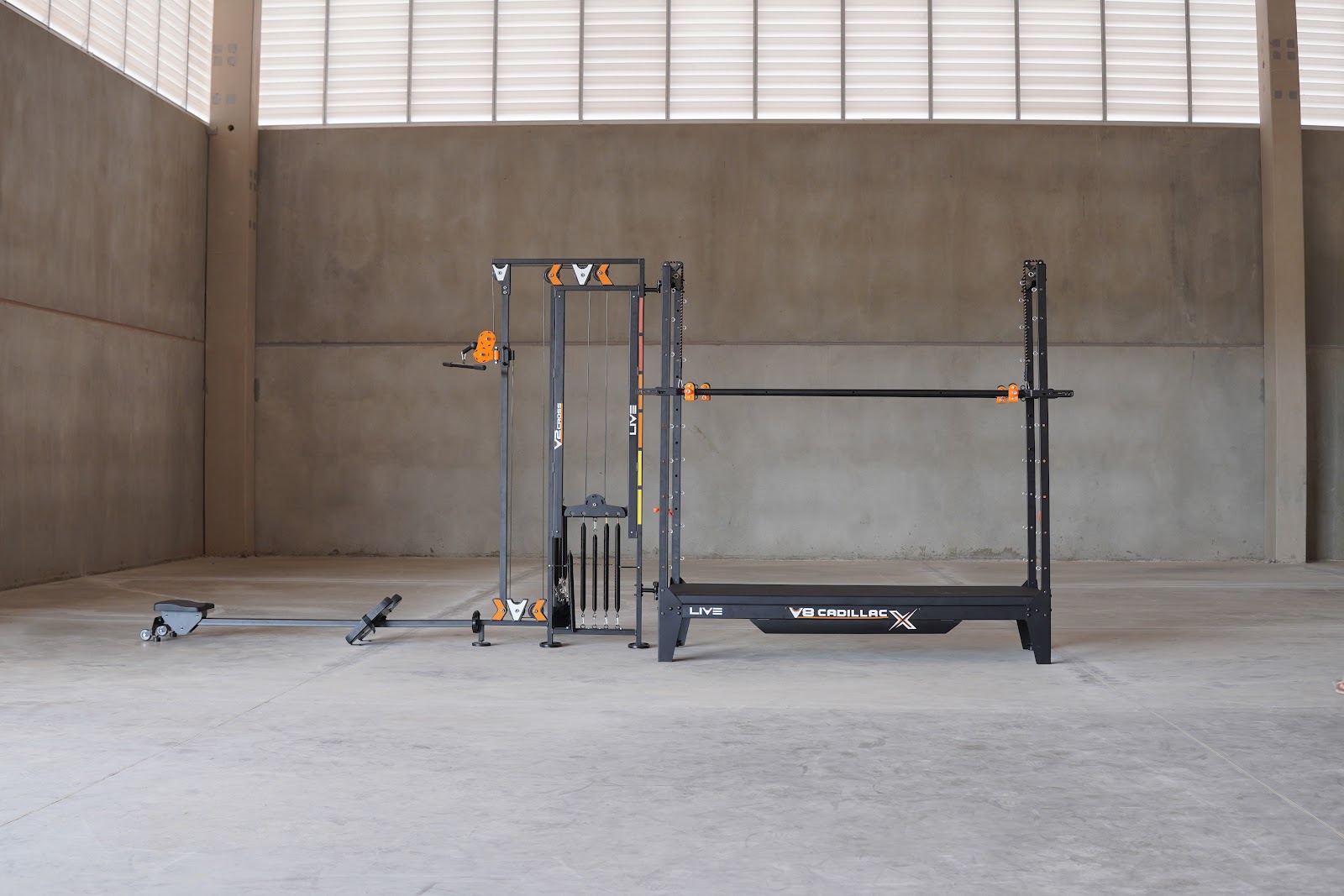
Two sessions a week, placed on easy-run days or active-recovery days, already deliver measurable gains. Avoid an intense Pilates session immediately before a hard running workout. On the apparatus, spring resistance lets a runner focus on strength and stability without adding impact to legs already loaded by mileage, which is exactly the kind of stimulus a high-volume week needs. Studios that serve athletes often run this work in small groups; see how the format works on our group classes page, or explore the machines themselves on the equipment page.
03What to expect
Gains show up within a few weeks: a taller posture at the end of long runs, fewer recurring aches and more control in the final miles. It is consistency, not a miracle. The runners who benefit most are the ones who treat Pilates like part of the training plan, not an occasional extra.
Evidence supports core training for running economy and injury prevention, but individual programs vary. If you are managing an injury, involve a qualified professional before changing your training.