
Pilates and functional training share one governing principle: strength that starts at the center of the body and radiates out into movement. That common ground is why they complement each other so well, and why a growing category of equipment is designed to serve both approaches on the same studio floor.
Yes. Pilates builds core stability, control and breath; functional training transfers that base into everyday and athletic movement patterns. Equipment designed with elastic resistance or full-chain movement patterns, along with adapted reformers and simple accessories, lets a studio program both disciplines in the same square footage.
01Why Pilates and functional training work together
Pilates develops the qualities every athlete and every desk worker needs first: deep core stability, conscious control of movement and coordinated breathing. Functional training takes that foundation and applies it to the movements of daily life and sport, pushing, pulling, squatting, rotating and carrying. Trained together, the two approaches improve strength, mobility and injury resilience in an integrated way that neither delivers alone.
In practical terms, Pilates teaches the body how to organize itself; functional training asks the organized body to perform. That is why so many studios now run both under one roof, often with the same clients moving between formats during the week. Our group classes page shows how studios blend the two into a single schedule.
02Which types of equipment serve both
Functional stations with elastic resistance
These machines replace stacked weights with elastic resistance. The result is lower joint impact and a continuous neuromuscular stimulus through the whole range of motion, which suits both conditioning clients and people working back from injury. Live's V2 Cross is built on this principle.
Movement-pattern equipment
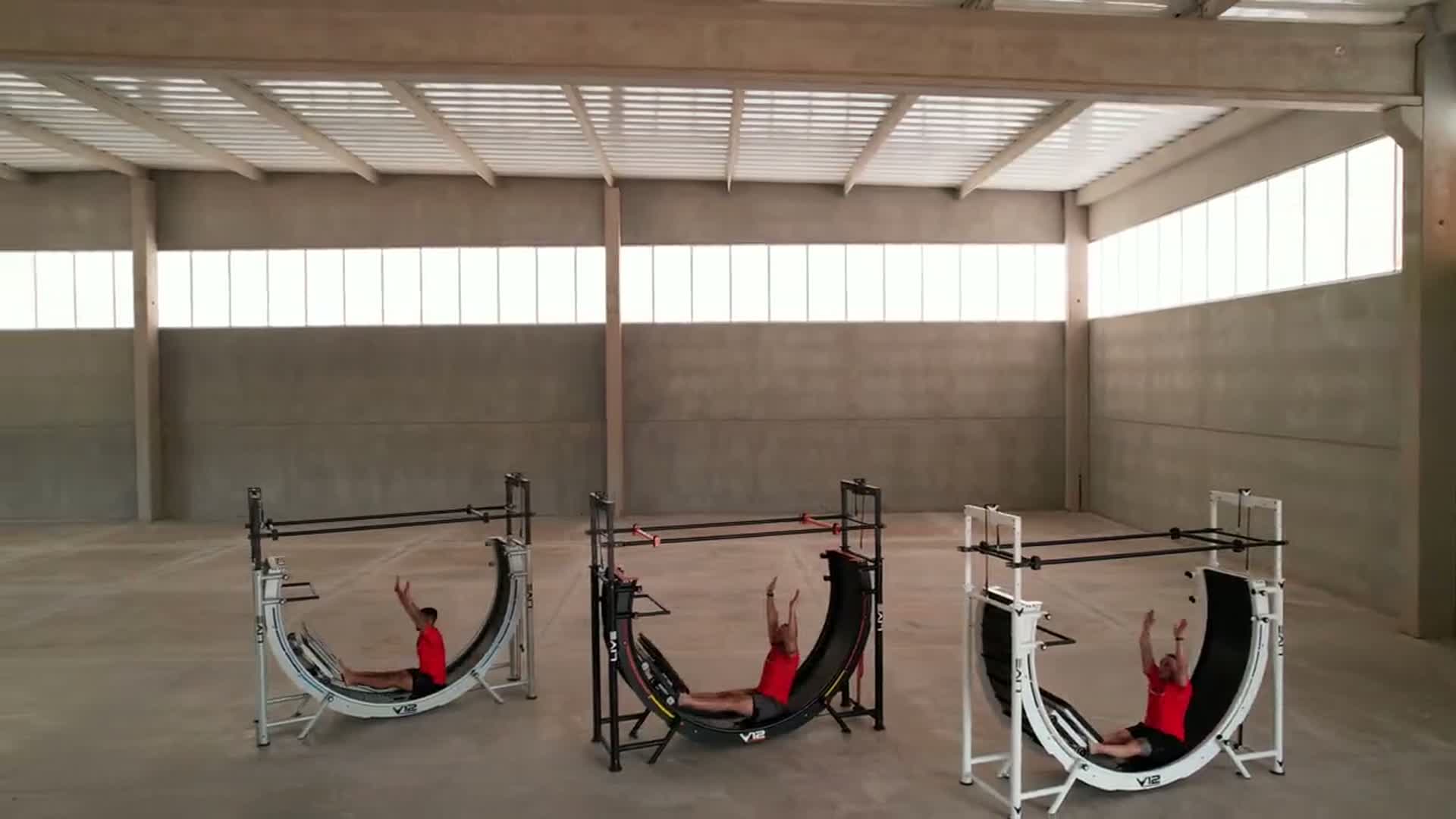
A newer category explores dynamic, full-chain movement patterns rather than isolated muscles. Stations like the V12 are engineered to activate the entire core chain while the body moves through functional patterns, which extends a Pilates studio's repertoire into performance and conditioning work.
The adapted reformer
With the right accessories, a professional reformer stretches well beyond the classical repertoire into functional exercise. The sliding carriage and spring resistance already train control under load; add platforms, bands and props and the same machine covers two programs. See our professional reformer guide for what makes a reformer capable of that double duty.
Accessories
Balls, resistance bands and platforms are the connective tissue between the two practices: inexpensive, portable and endlessly programmable. A small accessory wall multiplies what every machine on the floor can do.
03Is a two-in-one machine worth it?
Several manufacturers now offer equipment built for exactly this hybrid demand, and the category is growing quickly. Live, for example, builds the V2 Cross for elastic-resistance functional work and the V12 for functional movement training, both designed to live alongside a classical Pilates lineup rather than replace it.
For a studio owner, the math is straightforward: versatile equipment means more class formats and more client profiles served in the same square footage, without renting a second room. If you are mapping out a full floor plan, our guide to the best Pilates machines for a professional studio covers how functional stations fit into a complete lineup, and the equipment page shows the whole Live family side by side.
This article is informational. Programming decisions for clients with injuries or medical conditions should always involve a qualified movement or healthcare professional.