
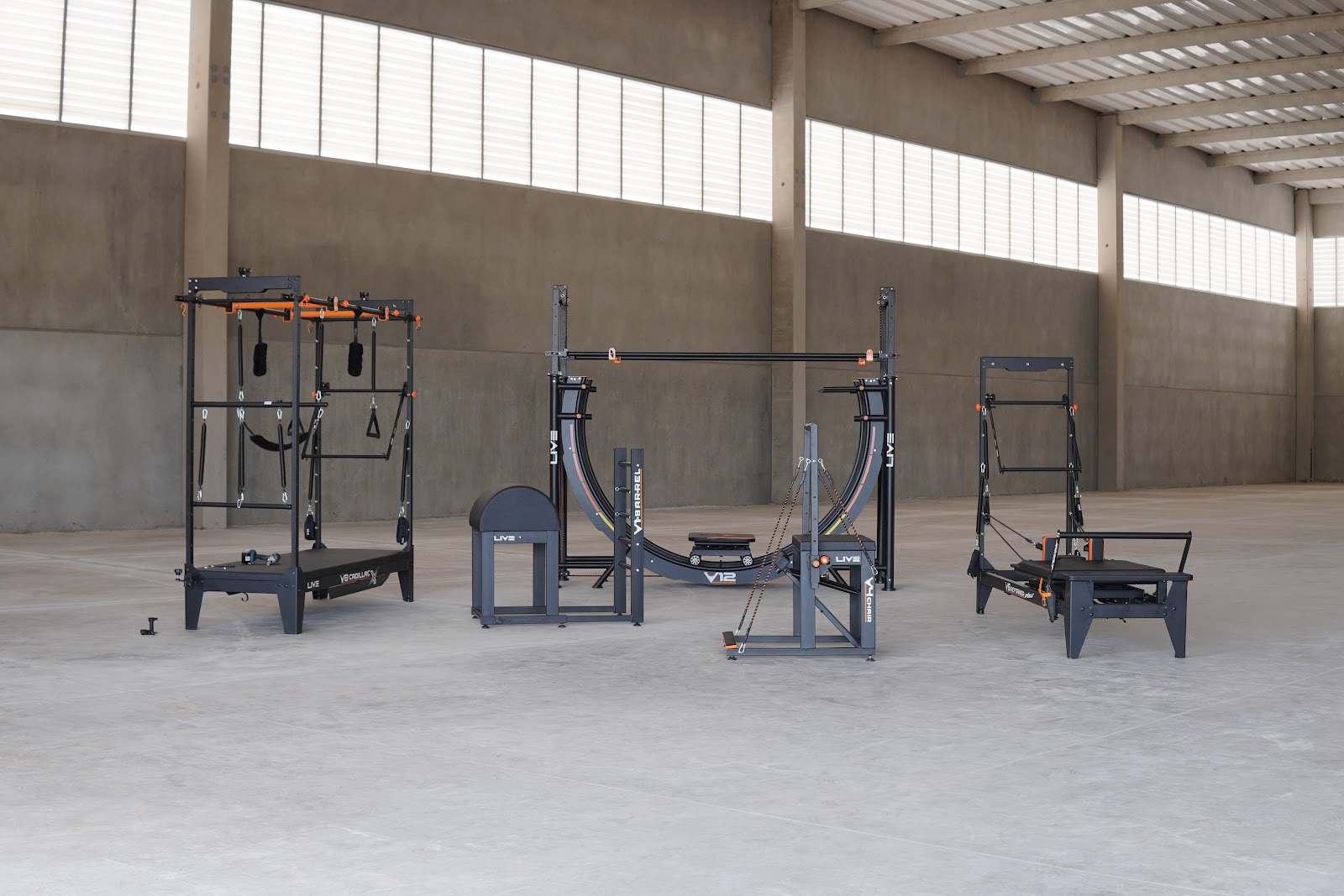
Fitness-style Pilates, dynamic group classes, usually on the reformer, has become one of the biggest phenomena in the fitness market. It pairs the classical method with workout energy, music and a more accessible price point than private sessions, pulling in an entirely new audience and fueling the boutique studio boom. For anyone who owns a studio, or wants to open one, it is one of the clearest opportunities of the moment.
Group fitness Pilates, often called group reformer, is a faster-paced, collective evolution of the traditional method: several clients training at once on reformers, with rhythm, music and a conditioning focus. It keeps the method's principles, core, control and breath, while making Pilates more accessible and more social, which is why it is among the fastest-growing formats in fitness.
01What group fitness Pilates is
It is an evolution of traditional Pilates into a more dynamic, collective format: several people training at the same time, normally on reformers, at a faster pace, with music and a conditioning focus. The principles of the method, core, control, breath, stay intact, but the energy is that of a fitness class. This is the format the industry calls group reformer, and it is the engine behind the boutique studio wave. Our group classes page shows how Live equips this format end to end.
02Why it is growing so fast
More accessible
Splitting a class across a group lowers the price per client. Pilates stops being exclusively a premium one-on-one service and opens to a much wider audience.
Energy and community
Training together, with music and rhythm, engages and retains people the way a great gym class does. Community is a retention engine.
Results and aesthetics
A defined body, better posture and the visual appeal of the reformer itself went viral on social platforms, and the demand followed.
The boutique model
Focused studios, strong brands and a designed experience: the boutique formula now dominates fitness, and group reformer is its flagship class.
03Group vs. private sessions
This is not a case of one format beating the other. Many successful studios combine group classes, which bring scale and recurring revenue, with private and clinical sessions, which bring high-ticket differentiation. The formats feed each other: group clients graduate into private work, and private clients add group sessions for frequency.
04Is the Pilates market actually growing?
Yes. Fitness industry reports have consistently placed Pilates, and group reformer in particular, among the fastest-growing modalities, driven by demand for low-impact training, wellness and aesthetics. The boutique model has accelerated studio openings and drawn investors into the segment. In practice: more people searching, more studios opening, more demand for equipment.
05The opportunity for your studio
More revenue per hour
A group class serves several clients in the same time slot, which scales revenue without scaling the schedule.
A front door for new clients
The accessible price point brings in first-timers who can later move into private or clinical services.
Equipment that can take it
Intense daily use and full classes demand reformers that are robust and easy to maintain. Our guides to Pilates equipment for studios and the professional reformer cover what to look for.
Experience and brand
Environment, energy and identity are what separate a thriving boutique from a room full of machines.
Whoever enters now, with structure and equipment equal to the demand, catches the wave of an expanding market. The one warning: do not improvise. A packed class on fragile equipment turns into maintenance costs, risk and churn. If you are starting from zero, our guide on how to open a Pilates studio walks through the whole build.
Market figures vary by source and region. Validate demand locally, and consult professional advisors before making significant business investments.