
Arms are one of the most common reasons people walk into a Pilates studio, usually with a very specific request: firmer, more defined, without the bulk. It is a goal the method happens to serve exceptionally well. This article covers how Pilates trains the arms, why it targets exactly the areas people worry about most, and who gets the best results from this approach.
Pilates tones the arms and fights the soft, loose feeling by working biceps, triceps and shoulders against spring resistance and body weight. The focus is control and long, firm muscles rather than bulk. Add the posture improvement that comes with the method, and arms look more defined and better aligned.
01How Pilates works the arms
Triceps first · the area everyone asks about
The back of the arm is where most people feel looseness, especially after weight loss or with age. Pilates pressing and stabilizing work, think long-lever push-throughs, reverse presses and planking variations, targets the triceps directly. Because the method demands control through the entire range of motion, the muscle works both while shortening and while lengthening, which is exactly the stimulus firmness requires.
Spring resistance · adjustable, joint-friendly load
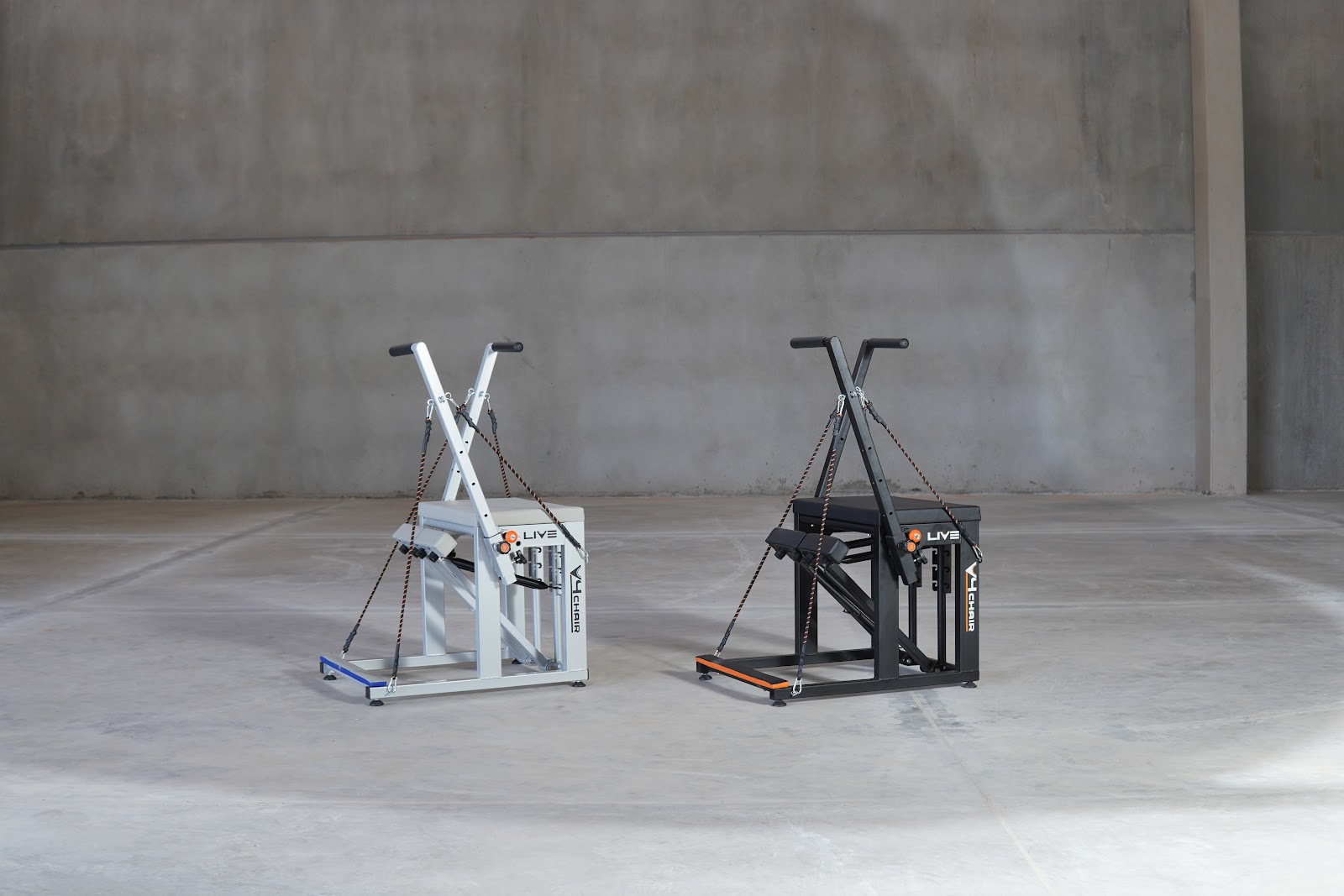
On the reformer and the chair, springs provide smooth, adjustable resistance that challenges arms and shoulders without the jarring load of free weights. An instructor can fine-tune the springs to your exact level, then progress them as you get stronger. Live's V4 Chair goes further than the traditional design here, adding mobile vertical bars with adjustable resistance that expand the upper-body repertoire well beyond the classic pattern. You can see the full apparatus range on our equipment page.
Shoulder posture · the hidden half of arm definition
Rounded, forward shoulders make arms look shorter and softer than they are. Pilates re-trains scapular position and opens the chest, and aligned shoulders instantly change how the whole upper body reads. It is a cosmetic upgrade and an orthopedic one at the same time.
Total control · stabilizers included
Slow, precise work through full range recruits the small stabilizing muscles around the shoulder girdle, not just the prime movers. That is what gives Pilates-trained arms their characteristic quality: strong, controlled and resilient, not just bigger.
02Who this approach is ideal for
- Anyone who wants firm, defined arms without bulk. The method builds tone and control rather than maximum volume.
- People dealing with looseness in the upper arm, common after weight loss or simply with the years. The triceps emphasis addresses it directly.
- Anyone who needs low impact, including those with sensitive shoulders, elbows or wrists, because spring loading is smooth and adjustable.
One honest caveat: if your goal is significant muscle mass, traditional strength training with heavy loads is the more specific tool. Pilates delivers firmness, control and posture; many people combine the two, and our post on strength training with Pilates explores exactly how they complement each other.
03What to expect, and when
Firmness tends to improve within the first few weeks of regular practice. Visible definition usually arrives with 2 to 3 months at 2 to 3 sessions per week, and results are stronger when paired with adequate protein and overall nutrition. As with any aesthetic goal, consistency is the multiplier: the schedule you can sustain beats the intense phase you abandon.