
Aerial Pilates uses a suspended fabric, like a hammock, to perform the method's exercises in the air or partially suspended. It combines strength, flexibility and spinal decompression through gravity traction, with intense core work and a playful quality that made it a social media favorite. It requires professional guidance; this is not a modality to teach yourself.
Aerial Pilates is the practice of the method in a suspended fabric hammock, in the air or partially supported. The fabric provides support and instability at the same time, so the core works constantly, and inverted positions decompress the spine through gentle traction. It is safe with a qualified instructor and proper rigging, and inversions are not appropriate for everyone.
01What it is and how it works
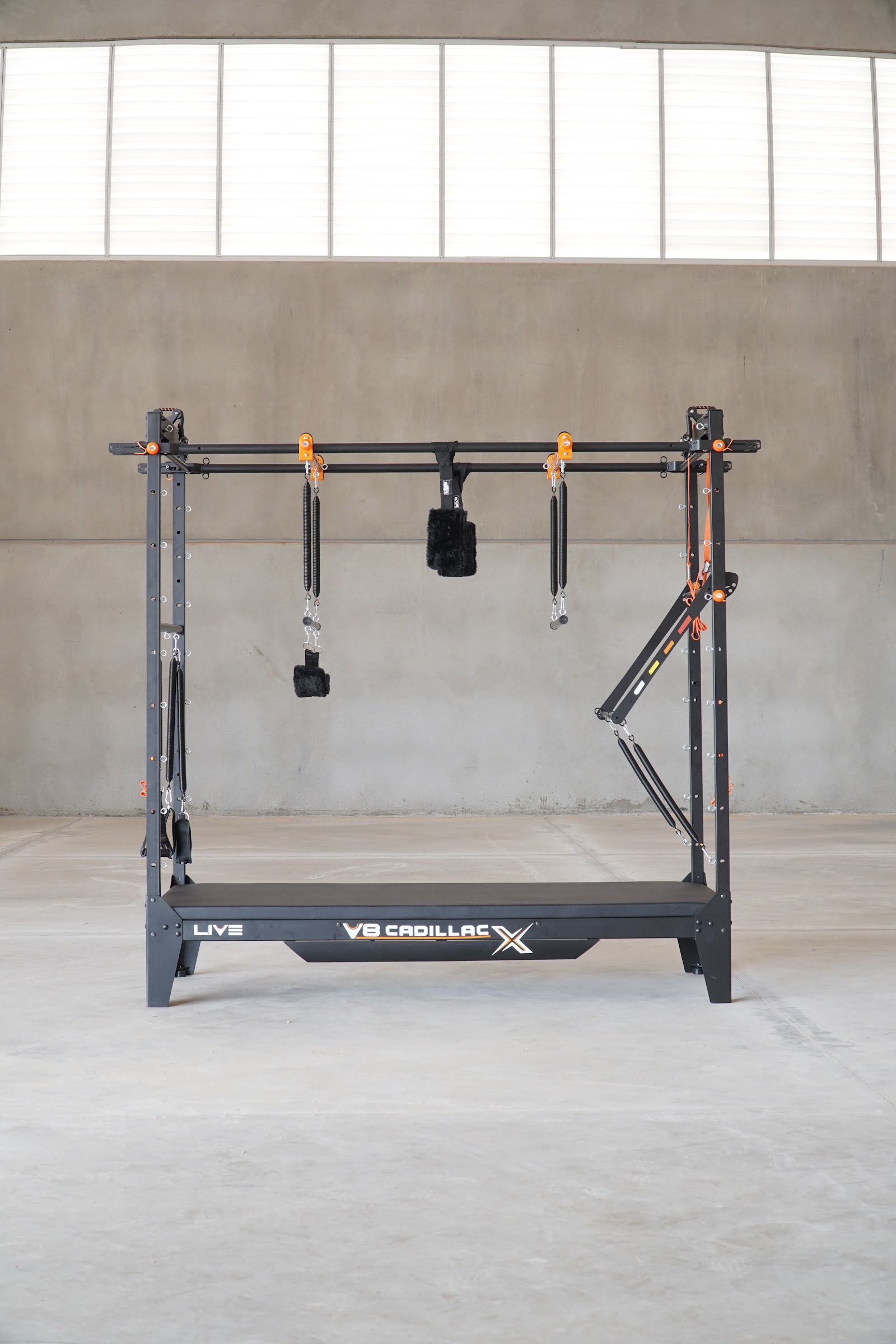
In aerial Pilates, the fabric gives support and instability at the same time. Suspended, the body has to stabilize continuously, which keeps the core working hard, while inverted positions use gravity to create traction and decompression along the spine. It is a playful, demanding evolution of the method, and its lineage is older than it looks: suspension work has been part of Pilates since the trapeze of the classical Cadillac, an apparatus we cover in our guide to the best Pilates machines.
02The benefits
Intense core work
The fabric's instability keeps the center of the body engaged the entire session; there is no passive moment in the air.
Spinal decompression
Inversions relieve the spine through gravity traction, a sensation many practitioners describe as the highlight of the class.
Flexibility
The fabric supports deep stretching, expanding range of motion with more security than unsupported floor work.
Motivation
The playful, photogenic format drives adherence and engagement, which is why studios use it to differentiate their schedules.
03Who it is for, and the cautions
Aerial Pilates asks for a baseline of conditioning and, above all, a qualified instructor: rigging, safety checks and progression all matter. Inversions may not be appropriate for people with high blood pressure, serious spinal conditions, pregnancy or vestibular disorders such as labyrinthitis. An evaluation comes first, always. For studios, the modality pairs naturally with a classical apparatus floor, giving clients a progression path between fabric and machine; our equipment page shows what that foundation looks like.
Aerial practice requires a qualified instructor and properly installed equipment. Inversions can be contraindicated in several conditions; get a professional evaluation before starting.