
You can absolutely do Pilates at home, starting with mat work, your own body weight and inexpensive props like a ball and a resistance band. It is a great way to build the habit, improve posture and strengthen the core. The main caution is execution: without guidance it is easy to compensate and lose the benefit, or get hurt.
Yes, Pilates at home works, especially for posture, core strength and keeping a consistent habit. Start with the mat repertoire and cheap props, and pay close attention to alignment and breath. The ideal formula for most people: learn the fundamentals with an instructor first, then practice at home between sessions.
01What you can do at home
Mat Pilates
The complete body-weight repertoire, the historical foundation of the method. A mat and floor space are genuinely all you need to begin; the 34 original exercises were designed for exactly this setting.
With props
An overball, a resistance band and a mini band expand the exercise menu for very little money. Our overball guide shows how one small ball multiplies the mat repertoire.
Wall Pilates
The wall works as both support and resistance, no equipment required. It is a useful bridge for beginners who want feedback on alignment.
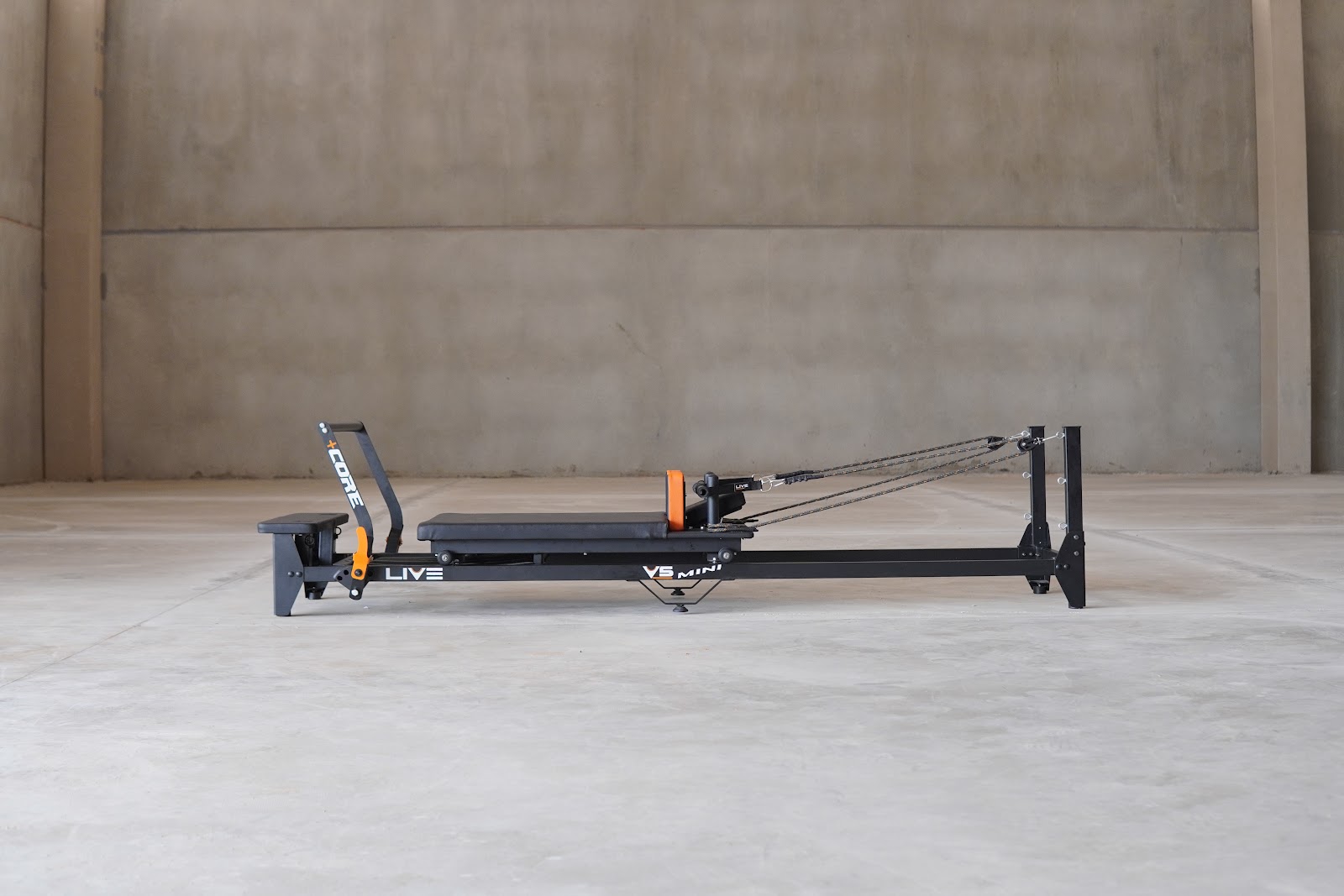
A reformer at home
For people who take the practice seriously, compact reformers built for home use bring spring resistance and real progression into a spare room. If you go this route, buy on the same criteria a studio would: frame quality, spring integrity and support. Our guide on where to buy Pilates equipment covers how to purchase well.
02The cautions that matter most
The biggest risk of home Pilates is doing it wrong on autopilot. Without a professional correcting you, postural habits slip through unnoticed and quietly undo the benefit. Two good exits: start with a few in-person classes to learn the fundamentals, or follow content from trustworthy sources while paying real attention to alignment and breath. Slow and precise beats fast and sloppy, every single time.
03Home vs. studio
| At home | At the studio |
|---|---|
| Practical and economical | Full apparatus and structured progression |
| Great for keeping the habit | Real-time correction from an instructor |
| No real-time feedback | The right setting for rehabilitation |
| Limited resistance options | More result per session |
The best of both worlds is the combination: learn the base at the studio and keep frequency at home between classes. For a deeper look at what the apparatus adds over the mat, read Reformer vs. mat Pilates.
To start safely, consider at least a few sessions with a qualified instructor, especially if you have back pain or another condition that affects movement.