
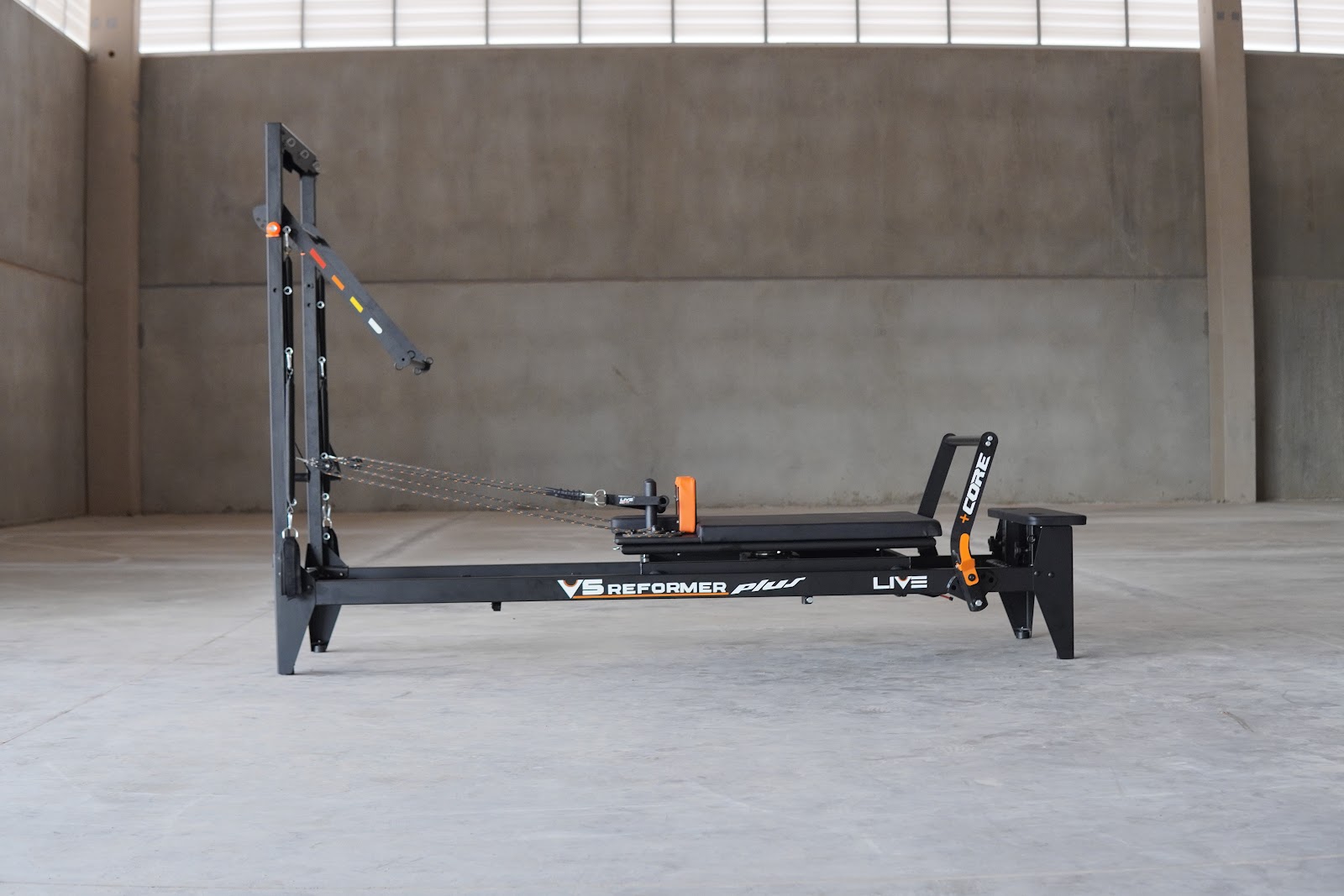
A professional Pilates apparatus works harder than almost any other piece of fitness equipment: hour after hour of spring tension, sliding carriages and client weight, every day the studio is open. So the questions every buyer asks are fair ones. How long does it actually last? What wears out first? And how much maintenance does it really need? Here is a practical, no-nonsense answer.
A well-built premium apparatus is engineered for intense daily use and lasts many years with simple, routine maintenance. The biggest factors in durability are the quality of the frame and the springs, followed by something buyers often overlook: how easy it is to get spare parts and service when something eventually needs repair.
01What affects the lifespan of an apparatus?
Frame and welds
The structure is the foundation of everything. Frame material and weld quality determine how stable the machine stays under repeated load, year after year. A frame that flexes or loosens does not just age faster; it changes how the machine feels and moves, which your clients notice long before anything visibly breaks.
Springs and pulleys
These are the true wear components. Springs lose consistency over time and pulleys accumulate friction. Higher-quality components stretch the replacement interval considerably, which is one of the places where a premium machine quietly earns back its price.
Upholstery and rails
The parts that take daily human contact: sweat, friction and cleaning products. Simple, consistent cleaning is what extends their life, and neglect is what shortens it.
Spare parts availability
The factor that determines the real cost of ownership. A machine that sits idle for weeks waiting for an imported part is not just a repair bill; it is lost class revenue every single day. When comparing brands, ask about parts stock and typical service turnaround before you sign anything. Our guide on evaluating equipment brands covers the questions worth asking.
02The maintenance routine (simpler than you think)
- Daily cleaning. Wipe down upholstery and rails after use. Clean surfaces prevent premature wear and keep the machine feeling new to clients.
- Spring inspection. Check tension, coils and hooks periodically. A spring showing gaps or deformation gets replaced, not monitored.
- Rail lubrication. Keeps the carriage gliding smoothly and reduces friction on the wheels. A rough carriage is usually a lubrication issue caught late.
- Scheduled service. A periodic preventive check of bolts, straps, wheels and springs prevents the unplanned stoppage that always happens at the worst possible time.
03What about equipment with electronic components?
The mechanical side is maintained exactly like any premium apparatus. The electronic side tends to be modular and depends on the manufacturer's support structure. Before buying a machine with embedded technology, ask how service works for the electronic components, whether software updates are provided, and what the warranty covers on that part of the machine. Clear written answers to those three questions tell you a lot about the company behind the product.
04Think in total cost, not purchase price
Two machines with different price tags can have very different ten-year costs. Parts availability, local service response and preventive maintenance programs all change the math. A machine whose parts are easy to obtain and whose manufacturer answers the phone keeps earning; one that waits on slow, expensive imported components does not. That is why experienced buyers compare the total cost over the years, not just the invoice.
| Factor | Strong support network | Weak support network |
|---|---|---|
| Spare parts | Readily available, predictable cost | Slow to arrive, can get expensive |
| Service | Responsive, accountable manufacturer | Depends on a distant intermediary |
| Downtime | Days, planned | Weeks, unplanned |
Some manufacturers, Live among them, offer preventive maintenance programs that reduce surprises and keep machines in continuous service. If you are equipping a full studio, our overview of Pilates equipment for studios puts durability in the context of the whole purchase.